
What Makes a Great Historian? İnalcık vs Ortaylı | Ibn Khaldun Judges
- Publisher
- SiliconJury
- Language
- en · Localized adaptation
Episode topic
What Defines an Enduring Historian: Methodological Discipline or Intellectual Interpretation?
A town’s tax records fall from 100 households to 60. Did forty percent of its population disappear—or have we misunderstood what the documents actually count? In this imagined, AI-created SiliconJury debate, Halil İnalcık and İlber Ortaylı explore what gives a historian lasting value. İnalcık makes the case for deep knowledge of sources and disciplined research. Ortaylı argues that independent judgment, revealing questions and clear explanation turn reliable information into meaningful understanding. Across 12 rounds, follow a fictional archival mystery and learn how to distinguish evidence from interpretation, recognize copied reports, question comparisons and revise a conclusion when new evidence appears. The jury: Ibn Khaldun, Fuat Köprülü and Ahmet Cevdet Paşa. Which matters more for a historian’s legacy—and which argument changed your mind? This is an educational AI reconstruction, not an actual conversation, authentic voice recording or collection of historical quotations. The opposing roles and jury verdicts are fictional interpretations, not definitive statements of these figures’ real beliefs. The case documents and numbers are invented teaching examples. #History #Historiography #SiliconJury
Available editions
Figures represented
- Halil İnalcıkA preeminent Turkish historian known as the 'Sheikh of Historians' for his definitive work on the Ottoman Empire.
- İlber OrtaylıA preeminent Turkish historian and scholar renowned for his expertise in Ottoman history and his polyglot erudition.
- Ibn KhaldunArab sociologist, philosopher, and historian widely considered a founding father of modern sociology and historiography.
- Fuat KöprülüA pioneering Turkish historian and statesman who transformed the study of Turkish literature and Ottoman history.
- Ahmet Cevdet PaşaA preeminent Ottoman statesman and polymath who codified Islamic law into the Mecelle and wrote definitive histories.
Sources & references
Source references have not been supplied in this public edition record.
Published transcript
AI-assisted historical reconstruction
I'm Halil İnalcık, a historian of the Ottoman world. This is an imagined
educational debate, not a record of our words or a statement of positions we
actually held. Give two historians the same box of documents. Both can read
them. One produces a dependable account; the other asks a question that changes
how we see the past. Fifty years later, whose work still matters? I give greater
weight to knowledge of sources and disciplined method. That means more than
remembering dates. Show us what you know, how you know it, and what could prove
you wrong. An original interpretation matters. Clear writing matters. But a
reader should be able to examine an argument without trusting the reputation
attached to it. The lasting historian leaves something stronger than a famous
name: work that others can check, challenge, and use.
I'm İlber Ortaylı, a historian and teacher. And I would start by opening that
box, Professor. It doesn't come with a label saying, “Here is the important
question.” Somebody has to choose it. By intellectual individuality, I mean
independent judgment, the ability to connect evidence, and the skill to make an
argument understandable. A loud voice qualifies you for none of those things.
Two competent readers can study the same tax record. One describes a change in
revenue. The other asks whose lives changed, who benefited, and why. That
question sends us looking for different evidence. You have described what makes
a historian trustworthy. I am asking what makes that historian worth returning
to. Among people who do reliable research, the greater contribution often comes
from helping others see something they had never thought to look for.
Let's give the audience a case to solve. Our town and every document in this
example are invented for teaching. One tax register lists one hundred
households. A register compiled ten years later lists sixty. Someone announces:
“Forty percent of the population disappeared!” An arresting claim. Have we
established it? We have counted households listed for a particular tax, not
every person in town. Perhaps people moved away. Perhaps exemptions changed.
Perhaps the district boundary moved, or the officials counted households
differently. Even unchanged definitions would not make households
interchangeable with individual people. Before explaining why the residents
left, establish whether the record shows residents leaving. This is where method
earns its keep. One distinction between what a document counts and what we wish
it counted can prevent an entire invented disaster from entering a history book.
Then let's investigate those possibilities. Writing “not established”
across the page is a useful beginning, but a rather short book. If families
moved, we might find them in another town's records. If they received
exemptions, we need the rules and the list of recipients. If the boundary
changed, records from the neighboring district become relevant. These are
competing explanations, each suggesting a different search. A historian must
decide which evidence could distinguish them and which lead is worth pursuing
first. That requires judgment as well as caution. The number sixty cannot design
that investigation for us. We have to imagine explanations without mistaking
them for facts. I accept your warning about the missing residents. My claim is
that intellectual initiative turns that warning into a research problem. A good
historian doesn't merely identify
uncertainty; they find a way to work on it.
And that work needs rules we can explain. Suppose we discover three reports
saying our town emptied out. Three independent witnesses? Let's check before
we celebrate. We compare the dates, wording, and references. Two reports turn
out to have copied the first. We have three pieces of paper, but one originating
account of the event. The modern version is familiar: ten websites repeat the
same report. That is not ten separate confirmations. Repetition can make a claim
feel stronger without adding any information about whether it happened.
Your competing explanations are valuable. But knowing the relationships between
sources tells us how much weight their evidence can bear. Without that
knowledge, a clever argument can become increasingly confident while standing on
exactly the same uncertain foundation. Counting references is easy. Establishing
what those references actually support is the historian's responsibility.
For proving that the town emptied out, yes: one originating account. But ask a
different question, and the copies become interesting again. How did that story
acquire authority? Imagine we can establish that a clerk's report reached an
official summary, then a later chronicle. We could trace who repeated the claim,
who altered it, and which details survived. We must demonstrate those
connections, of course; similar wording alone doesn't tell the whole story. Now
a weak source for population change may be useful evidence about how information
traveled. “Useful for which claim?” belongs in every assessment of a source.
This is the contribution I am defending. We don't simply throw the duplicate
reports into a wastebasket. We recognize another investigation they could
support. Careful checking exposes a limitation; an inventive historian can
turn that discovery into a different kind of understanding.
That's a useful distinction: a source's value depends on the question. Now our
invented file produces an official order instructing local authorities to reduce
the tax burden. Can we write, “Life became easier for the townspeople”? An order
tells us what someone instructed officials to do. It doesn't establish what the
officials did. We need accounts, complaints, or other evidence of
implementation. Nor does the order alone prove that every collector had
previously abused the residents. Its wording, audience, and circumstances
matter. Otherwise, we turn one document into several claims it cannot support.
Students should remember this distinction: what was supposed to happen is not
automatically what happened. It sounds obvious when stated plainly. Yet forget
it, and a history of government promises can quietly become a history of public
welfare. Detailed knowledge of sources protects us against that substitution.
And the distance between the order and its execution gives us an excellent
question. Who actually had the power to change what happened in the town? We
could investigate the central office, the local collector, and the households
paying the tax. Did officials have the resources to carry out the order? Could
influential residents delay it or redirect its benefits? Those are possibilities
to investigate, not answers to announce. Our subject has now grown beyond a
sequence of decrees. We are asking how power worked in ordinary life. That
change of focus could lead us toward evidence the central administration never
thought important enough to preserve. You stopped us from treating a command as
a completed action. I want to use that distinction to explain a relationship.
Lasting historical work does more than correct a sentence.
It can change what the whole investigation is about.
Then we should examine whom our investigation can actually see. A tax
register was created for an administrative purpose, not to answer every question
future historians might ask. If it lists selected household heads, it cannot
directly describe every member's economic activity. A woman's missing name
doesn't prove she made no economic contribution. The absence of a poor
resident's complaint doesn't prove that person had nothing to complain about.
Perhaps the person couldn't access the court. Perhaps a document was lost. We
can consult other surviving evidence: contracts, letters, court proceedings, or
material objects. Where uncertainty remains, we should say so. This is source
knowledge in practice. It includes understanding omissions. A careful
historian doesn't simply repeat the government's view. They ask what the
institution could see, what it wanted to record,
and whose activities fell outside its attention.
But somebody first has to decide that the people outside that attention deserve
an investigation. A historian can read every decree accurately and still ask
only about rulers and ministers. No forgery, no mistranslation, perhaps
excellent references. Yet the questions leave workers, women, migrants, and
indebted families almost entirely out of the picture. Intellectual independence
means noticing that limitation, including when it is a habit inherited from
respected teachers. We ask about something previous scholarship considered
ordinary, invisible, or unimportant. Only then do we begin searching for the
evidence your method will help us evaluate. I am not proposing imaginary
speeches for people who left no testimony. I am defending the decision to take
their experiences seriously. That decision can change a field before the first
new document is found. Accuracy matters enormously, but accuracy within a narrow
question does not make the question sufficient.
A better question can change a field. So can a contribution that attracts far
less attention. Let's compare two capable historians, not a brilliant thinker
with a mindless collector. One establishes reliable readings of difficult
documents and publishes them with the information others need to use them. The
second draws on that work to produce a striking interpretation. Both are
thoughtful and careful. The second book may reach more readers. Fifty years
later, however, researchers with entirely different questions may still depend
on the first historian's edition. Its author never needed to anticipate all
those uses. That quiet service belongs in our judgment of lasting value. Work
that makes a body of evidence accessible can outlive the interpretation that
first made it fashionable. I don't want historical importance measured only by
the most visible change in an audience's perspective.
Dependable resources make later discoveries possible.
They do. But you deliberately gave us two careful historians, so carefulness
alone hasn't decided which made the greater contribution. An edition can open
a field. An interpretation can reveal that the field has been asking the wrong
question. Neither contribution can be weighed simply by counting pages,
footnotes, or readers. And consider your editor. Perhaps everyone else
overlooked those documents. Recognizing their potential, connecting them, and
deciding to make them available can itself be an act of intellectual
originality. My argument includes that scholar; it isn't reserved for the person
with the more elegant prose. Once both researchers have met the standard of
reliable work, we still need to ask what each made newly possible. A solid
foundation matters. But the difference between two lasting contributions often
lies in the judgment that chose what to build on
it, and whom that work enabled to think differently.
Let's test that judgment with a comparison. Imagine two towns. Recorded
complaints rise sharply in one and remain low in the other. Was the first town
more oppressive, or the second more just? Perhaps. But first match comparable
periods and types of complaint. Check the court's reach, who could file a case,
and how much of each archive survives. Lower filing costs could increase
complaints without an increase in mistreatment. A shared institutional name
doesn't guarantee that people had the same access to it. If we ignore those
differences, the comparison may explain our records rather than the towns. This
is why I resist treating method as an inspection performed after the creative
work. Knowledge of how evidence was produced helps create a better question in
the first place. It doesn't merely stop bad
answers. It changes what we know enough to ask.
And putting those towns together helped reveal the question. More complaints
might mean more opportunities to seek justice. Without the comparison, we might
never have considered that explanation. We can investigate it. Who began
appearing in court? Did filing rules change? What kinds of cases increased, and
what decisions followed? We should compare like with like, including the periods
and surviving records you identified. I don't imagine creativity doing its work
in one room while method waits next door. Questions and checks keep changing
each other. But choosing to connect two apparently separate cases is an
intellectual decision too. Your safeguards tell us when a comparison is
defensible. The comparative insight tells us why it might matter. It could move
our understanding of justice beyond simply counting grievances toward asking who
could make a grievance heard. That is a substantial
contribution, not a decorative interpretation.
Let's turn to communication. Someone makes a video about our town: “Ten years.
Forty percent gone. The mystery of a vanished population!” I can see the
attraction. I cannot see the supporting evidence. A clear explanation is
valuable, but removing the distinction between taxpayers and residents doesn't
make this one clear. It makes it wrong. The audience needn't hear every
reference read aloud. They do need to understand which claim comes from the
document, which part is our interpretation, and what remains
uncertain. That applies in a lecture as much as in a specialist book. So here's
a practical challenge, Professor. Explain our original tax-register puzzle to a
teenager in three sentences. Keep the interest. Keep the uncertainty. Give them
a reason to investigate. That will tell us more about good communication than
comparing the size of two historians' audiences.
Gladly. “A town's tax registers list forty fewer households after ten years. We
don't yet know whether people moved away or the rules for counting households
changed. To solve the puzzle, we must investigate both the residents' lives and
how the tax records were made.” Three sentences. The mystery survives, and we
haven't sold the audience an answer we don't possess. Good communication
arranges information so someone else can follow the reasoning. Repeating our
terminology isn't proof of learning. Recognizing what evidence could settle the
question is much better evidence of it. Explanation also tests the person giving
it. If I cannot make the connection between two claims understandable, perhaps
I haven't understood that connection myself. This is why communication belongs
inside intellectual work. It can expose a confused argument, invite a challenge,
and give the listener a method of thinking they can actually use.
That explanation works. Now let's add a discovery to our invented case. This
time we match names and dates across the registers. We identify forty households
listed in the first and absent from the second, then find them on an exemption
list for the same town compiled at the time of the second register. Their
absence from the tax-paying list is no longer evidence that those forty
households left. This doesn't prove nobody migrated, or that everyone became
prosperous. It resolves a particular problem with our original inference. If I
had published a migration theory based on that drop, I would owe readers a
visible correction explaining what changed. Quietly replacing a sentence
would leave earlier readers believing an argument I no longer support. That is a
decisive test of a historian. Will new evidence be allowed to damage a favored
explanation? Research becomes a durable public resource when a scholar's
reputation cannot overrule the evidence.
If I had made that claim, I would owe the same correction. And then I would have
another question: why did these forty households receive exemptions while others
continued paying? Perhaps they performed a particular service. Perhaps the
administration changed a category. We cannot choose an explanation without
evidence. But we now have a more precise problem about taxation, privilege, and
the life of the town. The migration claim doesn't get to survive merely because
it sounded interesting. Without another basis, it must go. The investigation,
however, can continue in a better direction. Intellectual independence
includes independence from your own favorite answer. It takes judgment to
recognize what must be abandoned and what can still be investigated. My
historian does not respond to correction by becoming silent. They use it to ask
a sharper question and construct a more revealing account.
Agreed, but let's not grant every failed theory an honorary award for
stimulating discussion. Some impressive arguments merely make other researchers
spend years cleaning up an avoidable mistake. We should examine a work's costs
as well as its influence. Did it open a productive question? Could readers
inspect its evidence? Or did the author's reputation make a weak claim difficult
to challenge? In our town, a reliable edition of the registers, with the
exemption list properly explained, could serve many future projects. Researchers
might ask about questions its editor never imagined. That contribution doesn't
depend on preserving the editor's interpretation or public standing. I am
defending work that remains useful after the person behind it has been
forgotten. A new perspective can be valuable, but a dependable body of
knowledge gives other people the freedom to develop perspectives of their own.
A theory doesn't deserve credit merely for being wrong in an interesting voice.
A valuable question generates serious investigation; it doesn't just generate
repair work. Still, a book can lose some answers and retain an important
intellectual contribution. It might teach readers to ask not only how much
revenue a government collected, but which households carried the burden.
Correcting a conclusion needn't erase that change of focus. Usable evidence is
one inheritance. Learning how to think with evidence is another. It passes to
students, readers, and scholars who may never repeat the original
interpretation. Remove both authors' names, if you like. We can still ask which
work gave us a new way to understand a significant problem. I want that
contribution to carry greater weight among reliable historians. Originality
isn't an exemption from accuracy; it is part of
what determines the importance of accurate work.
Let me state your strongest argument. No box of documents chooses a research
question for us. Selecting a problem, recognizing connections, and explaining
them clearly are substantial achievements. Without them, we can accumulate
correct information and understand very little. I won't quietly rename every one
of those abilities “method” and declare victory. Method makes the route from
evidence to conclusion defensible. Intellectual individuality shapes the
questions and the account we construct. Both draw on knowledge. My reason for
giving greater weight to source knowledge and discipline is what happens after
the author loses control. Later researchers must be able to reexamine the
work, use its evidence differently, and correct it against the author's wishes.
That capacity separates scholarship from personal influence. It lets a
contribution survive changes in fashion, interpretation, and reputation. Lasting
value includes what future readers can
responsibly do with the work on their own.
Then I will state your strongest argument. No original interpretation earns the
right to conceal how it was made. Readers must be able to challenge it. A book
that asks for personal loyalty is a poor model of scholarship. But being open to
examination still doesn't tell us how important a contribution is. Two books can
be accurate, transparent, and revisable. One settles a narrow question. The
other shows why an entire period deserves to be studied differently. In that
comparison, the greater value lies in the intellectual contribution made through
reliable work: the question, the reasoning, and the understanding others
can carry forward. That is not a prize for fame. You have explained why we can
trust the work. To judge lasting importance, I insist on another question:
what does that trust enable us to understand
that we would otherwise have missed?
Back to our two capable historians. Assume both are accurate and transparent. I
give greater weight to whichever makes more of the evidence usable for future
questions, including questions neither author imagined. A brilliant
interpretation matters; a dependable research resource can support many
brilliant interpretations after it. Take three questions away from tonight. What
does the source actually say? Which part has the historian inferred? What
evidence would change the conclusion? Asking them turns you from a recipient of
a story into someone capable of assessing it. In our invented town, forty fewer
registered households did not establish a forty-percent population decline.
Getting that distinction right changed the entire account. The lasting historian
makes future investigation more dependable, even when others overturn
their answers. That continuing usefulness is why source knowledge and
disciplined method deserve greater weight in judging their legacy.
Keep those three questions. Add a fourth: what do we now understand better? We
need to learn how to explain the past as well as how to challenge a claim about
it. Our tax list led to questions about migration, exemption, power, and whose
lives the records could reveal. Evidence must constrain every answer. But the
decisions that connected those problems did not come printed in the register.
Among historians whose research deserves trust, I give greater weight to the
person who chooses a revealing question, develops a strong argument, and enables
others to think with it. Those contributions make knowledge
intellectually useful. A lasting historian leaves more than “Here is what I
know.” They enable a reader to say, “Now I understand how to approach this
problem.” That transformation from information into shared understanding is
the contribution I have defended tonight.
I'm Ibn Khaldun, a historian concerned with social life and the rise and
transformation of states. My question tonight is how information becomes an
explanation. İnalcık exposed two consequential mistakes: treating
tax-paying households as a population count, and treating copied accounts as
independent confirmation. Without those distinctions, the investigation would
have started with false confidence. But Ortaylı demonstrated intellectual
originality rather than merely praising it. He showed how copied reports could
become evidence about the circulation of information. Later, he used the
exemption list to replace an unsupported migration story with a researchable
question about privilege. By a narrow margin, I vote for İlber Ortaylı. He
better demonstrated the contribution made by choosing and reformulating a
problem, once reliability is required of both historians. He also accepted that
an unsupported answer must be abandoned; a stimulating question does not rescue
a false claim. This is a vote for explanatory judgment exercised through
disciplined research. The strongest version of his argument depended on that
partnership, and it is that version I support.
I'm Fuat Köprülü, a scholar of history and literature. I am judging the
relationship between a wide intellectual perspective and precise knowledge of
sources. Ortaylı made strong arguments about people missing from official
records and about connecting apparently separate cases. He also showed that
recognizing the value of neglected documents can be an original contribution.
His position was not a defense of polished speech over research. The comparison
between courts nevertheless gives İnalcık the advantage for me. More recorded
complaints could reflect greater access, different filing rules, or better
survival of documents. Unless those differences are investigated, the same
number can support incompatible stories. I vote for Halil İnalcık. He showed
that source knowledge helps form a useful question, not simply inspect an answer
afterward. His account of reliable editions also established how a
contribution can remain useful for questions the original scholar never
considered. Ortaylı explained how work becomes intellectually significant.
İnalcık more convincingly explained how its value remains available to later
researchers, including those who disagree. For lasting
scholarship, I give that durability greater weight.
I'm Ahmet Cevdet Paşa, an Ottoman historian and statesman. My criterion is
the historian's responsibility when making claims about other people's lives.
The distinction between an order and its implementation was decisive. An
instruction to reduce taxes does not establish that residents experienced
relief. İnalcık showed why we must investigate that outcome separately. His
insistence on a visible correction after the exemption-list discovery extended
the same responsibility to the reader. Ortaylı gave the strongest demonstration
of clear teaching. His three-sentence explanation preserved both the puzzle and
its uncertainty. It offered the audience a way to investigate instead of
pretending the answer was already known. That strengthened his argument about
communication. By a narrow margin, I vote for Halil İnalcık. Both speakers
required scrutiny. İnalcık's stronger case was that reliable access to evidence
can serve future questions beyond the author's own concerns. I give that
continuing usefulness greater weight when judging lasting value. The jury's
result is two votes for İnalcık and one for Ortaylı. This favors disciplined
method in their disagreement about priority. It does not make an accurate but
intellectually empty account a great work of history.
Related episodes
The Conscience of the Superweapon
Scientists and states bear an overriding moral obligation to reject the development of thermonuclear weapons.
Calculating Numbers or Weaving Symbols
The true significance of the Analytical Engine lies in universal symbolic computation rather than automated numerical calculation.

Current War: Microgrids Versus Centralized Power
Localized direct-current microgrids provide a safer, more resilient, and less monopolistic foundation for electrical power than centralized alternating-current grids.
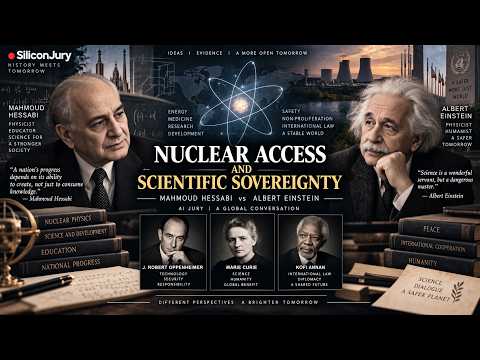
Scientific Sovereignty Versus Nuclear Proliferation Risks
Access to peaceful nuclear technology is a legitimate sovereign right and a requirement for scientific independence in developing countries; its benefits outweigh the geopolitical risks.