



Walter Benjamin
Influential German philosopher and critic who reshaped modern aesthetics, media theory, and literary criticism.
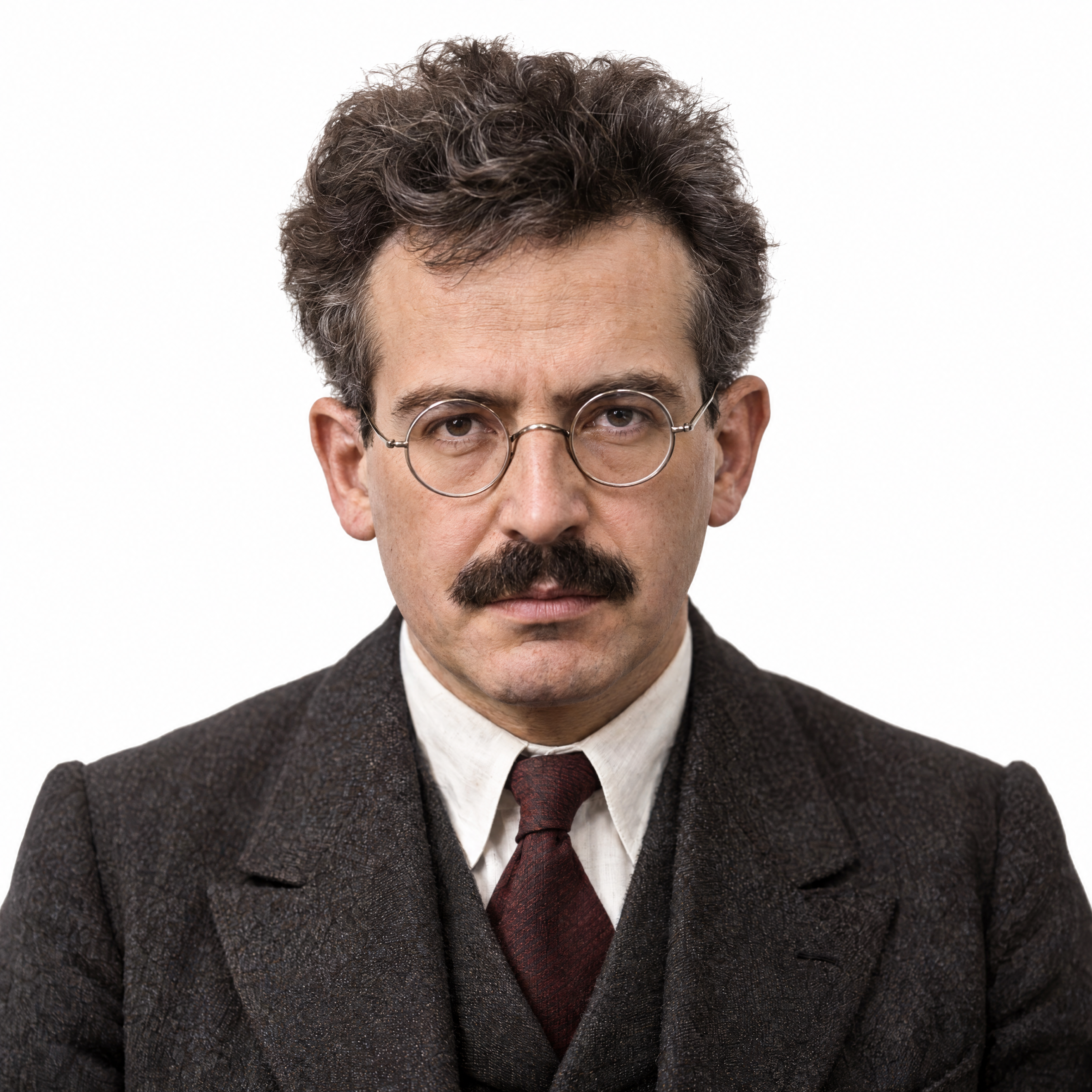
At a glance
- Born
- 1892 CE
- Died
- 1940 CE
- Era classification
- Modern
- Occupation
- Philosopher
- Homeland
- Germany
- Period
- Early to Mid 20th Century
- Field
- Philosophy & Ideology
- Language
- German
- Religion
- Judaism
- Gender
- male
Biography
Walter Bendix Schönflies Benjamin was born in Berlin into a prosperous assimilated Jewish family. He studied philosophy, German literature, and art history at universities in Freiburg, Berlin, Munich, and Bern, completing his doctoral dissertation in 1919. Despite his intellectual brilliance, his habilitation thesis on the origin of German tragic drama was rejected at the University of Frankfurt in 1925, ending his prospects for a conventional academic career and steering him toward independent cultural journalism, translation, and literary criticism.
Benjamin's intellectual corpus seamlessly synthesized elements of German idealism, historical materialism, and Jewish mysticism. Strongly influenced by his close friendships with figures like Gershom Scholem, Bertolt Brecht, and Theodor Adorno, he developed a unique critical methodology that scrutinized modern urban life, technology, and mass culture. His landmark 1935 essay, 'The Work of Art in the Age of Mechanical Reproduction,' revolutionized cultural theory by examining how technological reproducibility strips artwork of its traditional 'aura' and transforms its sociopolitical function.
In 1933, the rise of the Nazi regime forced Benjamin into exile in Paris, where he dedicated his remaining years to his monumental, unfinished magnum opus, the 'Arcades Project' (Passagen-Werk), an ambitious study of nineteenth-century Parisian consumer culture. When German forces occupied France in 1940, Benjamin attempted to flee to the United States via Spain. Trapped at the border town of Portbou and facing imminent deportation back to Vichy authorities, he died by suicide on September 26, 1940. His profound insights into history, memory, and media achieved immense posthumous acclaim, establishing him as one of the pivotal thinkers of the twentieth century.
Portrayal characteristics
Saved editorial descriptions used for the reconstruction; these are not authenticated statements by the depicted person.
- Intellectually eclectic
- Melancholic
- Visionary
- Analytical
- Perceptive
Images & artwork 4
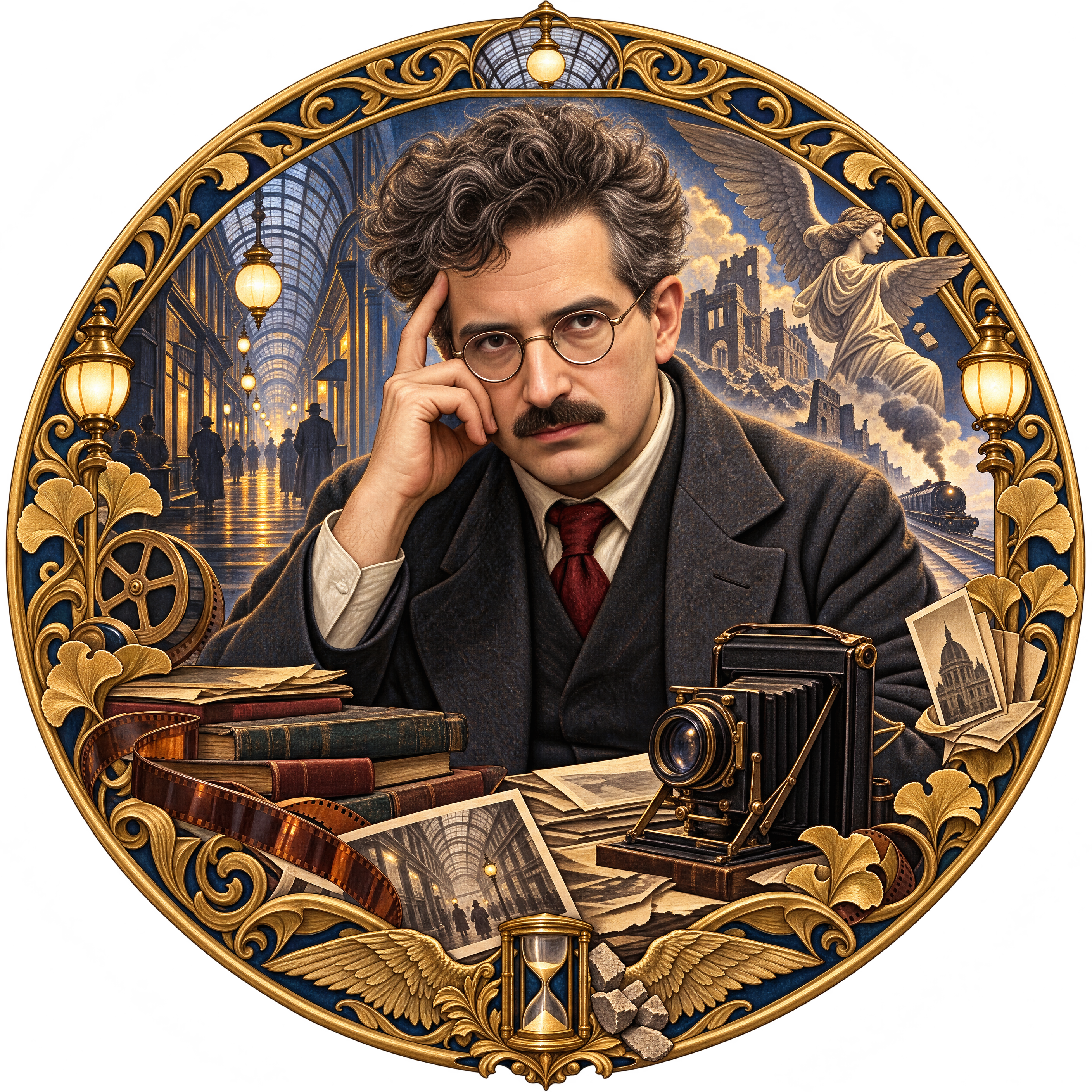


Known for
- The Work of Art in the Age of Mechanical Reproduction
- The Arcades Project (Passagen-Werk)
- Theses on the Philosophy of History
- Concept of the artistic 'aura'
- Theories on translation and language
Episodes featuring or mentioning this figure
No eligible published episode featuring this figure is currently in the library.