



Thomas Kuhn
Philosopher of science who revolutionized epistemology with the concept of paradigm shifts in scientific progress.
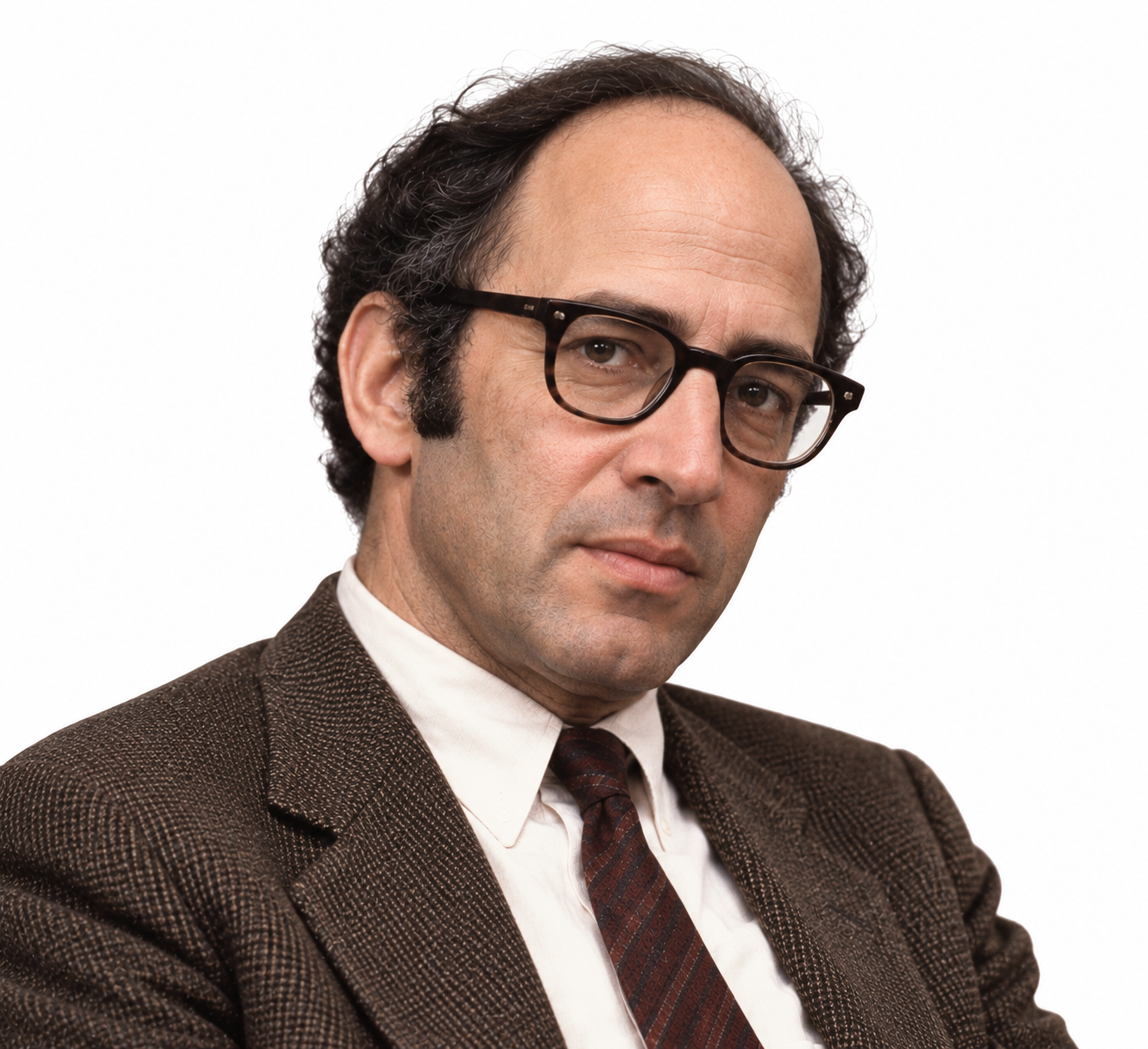
At a glance
- Born
- 1922 CE
- Died
- 1996 CE
- Era classification
- Modern
- Occupation
- Philosopher
- Homeland
- United States
- Period
- 20th Century
- Field
- Philosophy & Ideology
- Language
- English
- Religion
- Jewish
- Gender
- male
Biography
Thomas Samuel Kuhn was an American philosopher and historian of science whose 1962 book, 'The Structure of Scientific Revolutions', became one of the most cited academic works of all time. Born in Cincinnati, Ohio, Kuhn initially trained as a physicist at Harvard University, earning his Ph.D. in 1949 under the supervision of John Van Vleck. During his graduate studies, he was tasked with teaching a course on the history of science, which fundamentally altered his intellectual trajectory from theoretical physics to the historical and philosophical investigation of scientific change.
Kuhn challenged the prevailing positivist view that science progresses through a steady, linear accumulation of facts and theories. Instead, he argued that scientific development is characterized by long periods of 'normal science'—during which researchers operate within an established framework or 'paradigm'—interrupted by revolutionary periods. When accumulated anomalies can no longer be resolved within the existing framework, a scientific revolution occurs, precipitating a 'paradigm shift' that redefines the fundamental assumptions and practices of a discipline.
Central to Kuhn's philosophy was the thesis of 'incommensurability', the idea that competing paradigms cannot be directly compared using a neutral language because the terms, standards, and perceptions change across revolutions. His work drew sharp criticism from rationalist philosophers like Karl Popper and Imre Lakatos, who feared Kuhn's emphasis on sociology and scientific communities bordered on relativism and irrationalism, though Kuhn consistently defended his commitment to rational progress.
Kuhn held academic posts at Harvard, UC Berkeley, Princeton, and MIT, where he spent his later years refining his semantic and linguistic theories of scientific change. He passed away from cancer in 1996. His terminology, particularly 'paradigm shift', transcended academia and entered the popular lexicon, cementing his status as one of the twentieth century's most influential thinkers.
Portrayal characteristics
Saved editorial descriptions used for the reconstruction; these are not authenticated statements by the depicted person.
- Analytical
- Interdisciplinary
- Inquisitive
- Rigorous
- Perceptive
- Contemplative
Images & artwork 1
Known for
- The Structure of Scientific Revolutions
- Concept of Paradigm Shifts
- Theory of Normal Science vs. Revolutionary Science
- Thesis of Incommensurability
- Reshaping the History and Philosophy of Science
Episodes featuring or mentioning this figure
No eligible published episode featuring this figure is currently in the library.