



William the Conqueror
First Norman King of England who led the 1066 Norman Conquest and commissioned the landmark Domesday Book.
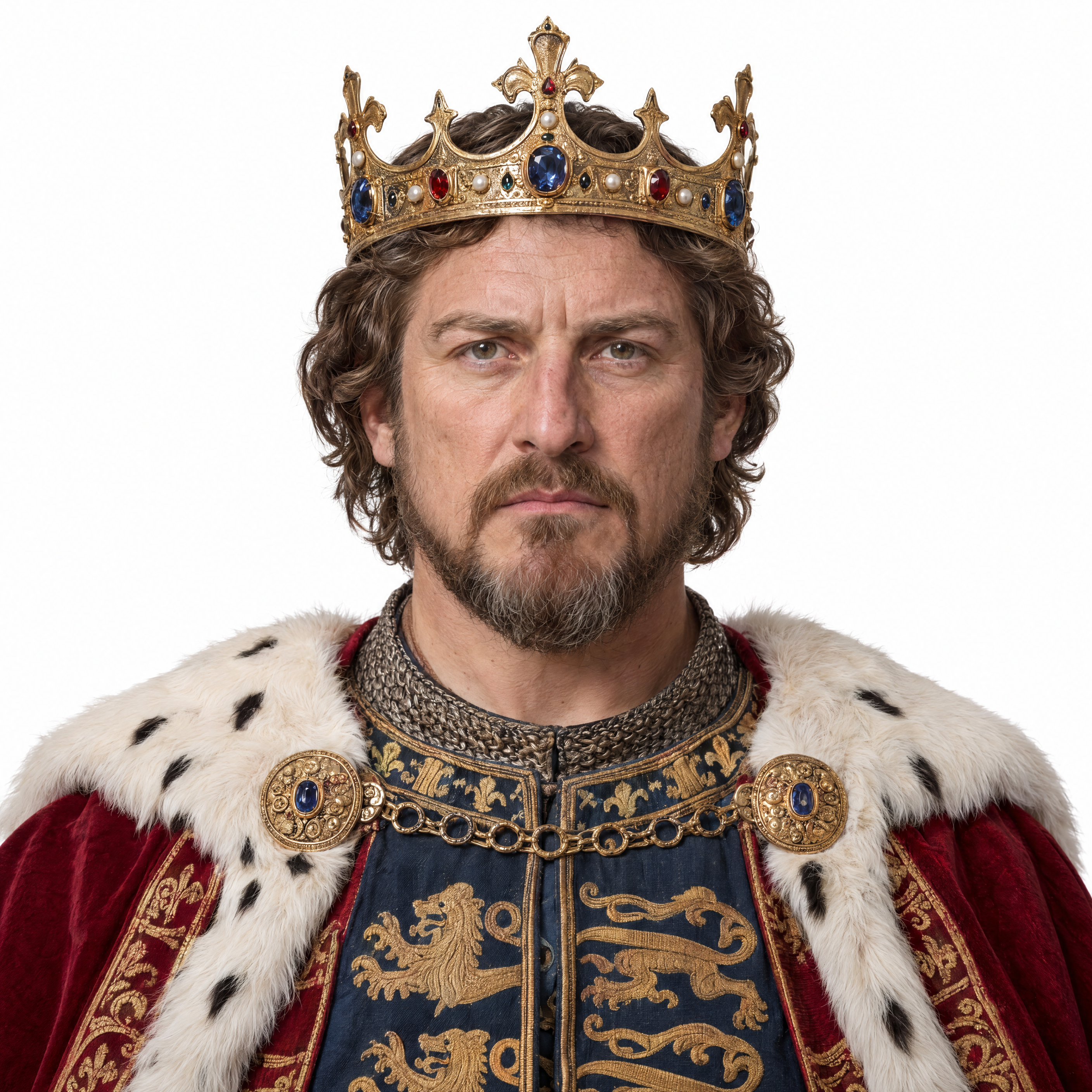
At a glance
- Born
- c. 1028 CE
- Died
- 1087 CE
- Era classification
- Medieval
- Occupation
- King / Queen / Emperor
- Homeland
- Duchy of Normandy
- Period
- 11th Century CE
- Field
- Politics, Leadership & War
- Language
- Old Norman
- Religion
- Roman Catholicism
- Gender
- male
Biography
William I, known as William the Conqueror and formerly William the Bastard, was born around 1028 in Falaise, Normandy. He was the illegitimate son of Robert I, Duke of Normandy, and Herleva of Falaise. Upon his father's death during a pilgrimage in 1035, William inherited the duchy as a young child. His minority was marked by widespread aristocratic violence and anarchy, but with the support of King Henry I of France, William decisively defeated a coalition of rebel Norman barons at the Battle of Val-ès-Dunes in 1047, subsequently consolidating iron control over Normandy.
In 1066, following the death of King Edward the Confessor of England, William contested the accession of Harold Godwinson, claiming that Edward had previously promised him the English throne and that Harold had sworn a sacred oath to uphold that claim. William secured papal backing, assembled an invasion fleet, and crossed the English Channel. On October 14, 1066, he defeated and killed King Harold at the Battle of Hastings. William was crowned King of England at Westminster Abbey on Christmas Day of that year.
His early reign in England was characterized by severe resistance to Norman authority, which William countered through systematic military campaigns and an unprecedented castle-building program, including the foundation of the Tower of London. To extinguish resistance in northern England, he orchestrated the brutal campaign known as the Harrying of the North (1069–1070), which devastated agricultural lands and resulted in mass starvation. Over his reign, William dispossessed nearly the entire Anglo-Saxon nobility, redistributing estates to his Norman and continental followers and reshaping the feudal structure of the kingdom.
In late 1085, facing threats of invasion and seeking to maximize taxation and royal control, William commissioned the Domesday survey. Completed in 1086, the resulting Domesday Book provided an exhaustive assessment of landholding, wealth, and resources across England. William spent his final years dealing with internal family disputes, notably rebellions by his eldest son Robert Curthose, and defending his continental borders. He died in September 1087 from injuries suffered during the siege of Mantes in France and was buried at Saint-Étienne in Caen.
Portrayal characteristics
Saved editorial descriptions used for the reconstruction; these are not authenticated statements by the depicted person.
- Ruthless
- Pragmatic
- Militarily decisive
- Administrative organizer
- Authoritarian
Images & artwork 1
Known for
- Norman Conquest of England in 1066
- Victory at the Battle of Hastings
- Commissioning the Domesday Book
- Initiating widespread Norman castle construction, including the Tower of London
- Restructuring English land tenure and feudal governance
Episodes featuring or mentioning this figure
No eligible published episode featuring this figure is currently in the library.