



William Osler
Canadian physician widely hailed as a father of modern clinical medicine and bedside residency training.
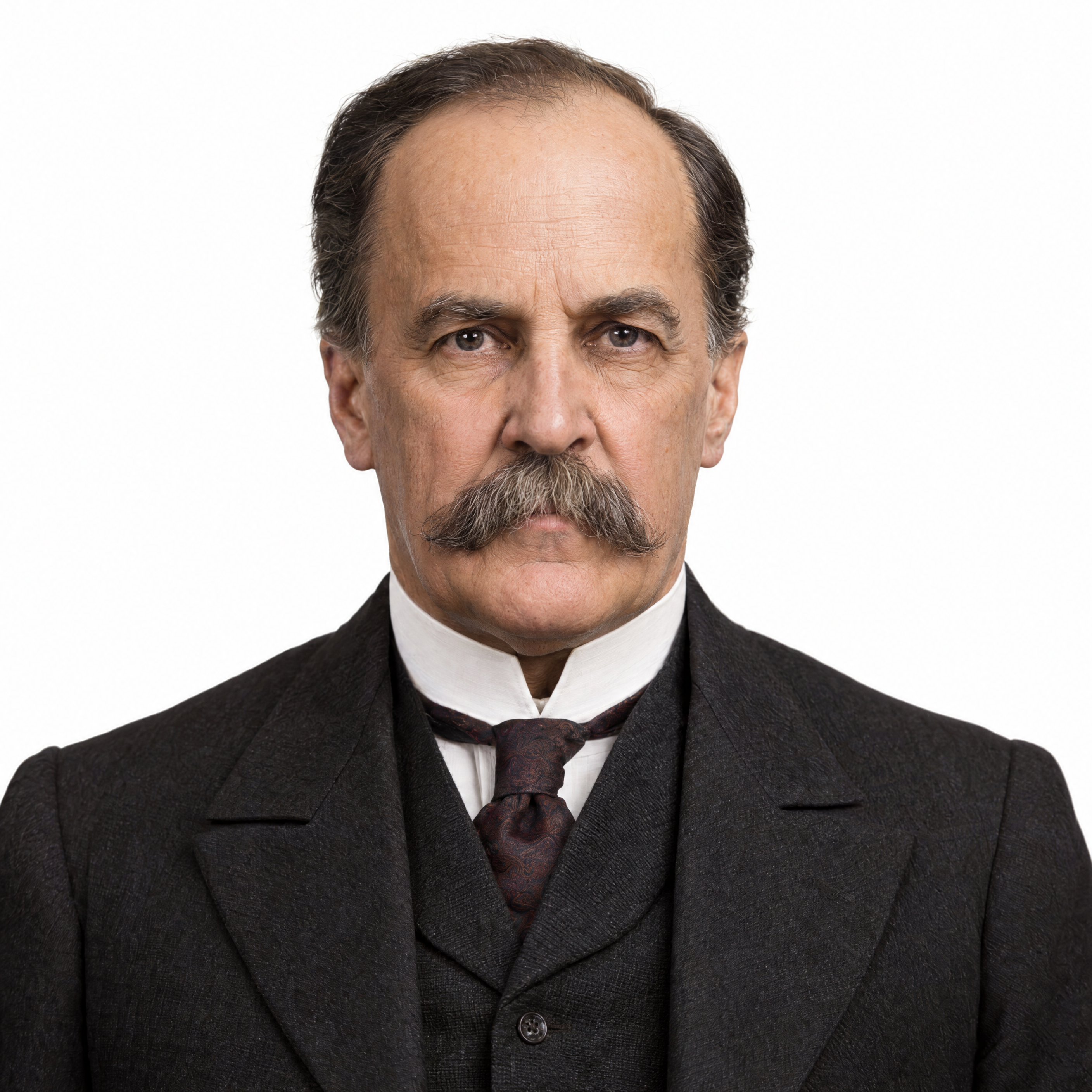
At a glance
- Born
- 1849 CE
- Died
- 1919 CE
- Era classification
- Modern
- Occupation
- Doctor / Physician
- Homeland
- Canada
- Period
- Late 19th – Early 20th Century
- Field
- Medicine & Natural Science
- Language
- English
- Religion
- Anglican
- Gender
- male
Biography
Sir William Osler was born in Bond Head, Canada West, in 1849. After abandoning initial plans for the Anglican clergy, he pursued medicine, receiving his degree from McGill University in Montreal in 1872. He continued his medical training across Europe, studying physiology and pathology in London, Berlin, and Vienna. Returning to McGill in 1874 as a professor, he gained a reputation for rigor in pathological anatomy, performing hundreds of autopsies and revolutionizing laboratory instruction.
In 1889, Osler was appointed Physician-in-Chief of the newly founded Johns Hopkins Hospital in Baltimore, Maryland, and soon became a foundational figure of the Johns Hopkins University School of Medicine. At Hopkins, Osler transformed medical education by removing students from passive lecture halls and placing them directly at the patient's bedside. He pioneered the clinical clerkship system and instituted the formal medical residency program, establishing a rigorous, supervised postgraduate pathway that remains the standard for medical training globally.
In 1892, Osler published his magnum opus, "The Principles and Practice of Medicine." The textbook, celebrated for its clear prose, scientific approach, and therapeutic skepticism, became the definitive medical text of its era. Its unsparing assessment of the limitations of contemporary drug therapy famously inspired Frederick T. Gates, advisor to John D. Rockefeller, to persuade Rockefeller to endow large-scale biomedical research, ultimately leading to the creation of the Rockefeller Institute for Medical Research.
Osler accepted the prestigious Regius Professorship of Medicine at the University of Oxford in 1905, where he spent the remainder of his life. Beyond his pedagogical reforms and clinical discoveries—such as describing platelets and identifying Osler's nodes in infective endocarditis—he was an ardent bibliophile and medical historian. Osler died in 1919 in Oxford from complications of pneumonia following the influenza pandemic, bequeathing his vast historical book collection to McGill University.
Portrayal characteristics
Saved editorial descriptions used for the reconstruction; these are not authenticated statements by the depicted person.
- Observant
- Empathetic
- Scholarly
- Meticulous
- Pedagogical
Images & artwork 1
Known for
- Co-founding Johns Hopkins Hospital
- Establishing the modern medical residency and clerkship systems
- Pioneering bedside clinical instruction
- Authoring 'The Principles and Practice of Medicine'
- Clinical descriptions including Osler's nodes and early research on blood platelets
Episodes featuring or mentioning this figure
No eligible published episode featuring this figure is currently in the library.