



Carl Gustav Jung
Swiss psychiatrist who founded analytical psychology and formulated the concept of the collective unconscious.
At a glance
- Born
- 1875 CE
- Died
- 1961 CE
- Era classification
- Modern
- Occupation
- Doctor / Physician
- Homeland
- Switzerland
- Period
- Late 19th to Mid 20th Century
- Field
- Medicine & Natural Science
- Language
- German
- Religion
- Christianity (Protestant heritage / Esoteric)
- Gender
- male
Biography
Carl Gustav Jung was born in Kesswil, Switzerland, in 1875. Raised in a devoutly religious household, he developed an early fascination with philosophy, theology, and the inner workings of the human mind. He pursued medicine at the University of Basel and later specialized in psychiatry, joining the renowned Burghölzli psychiatric hospital in Zurich under the mentorship of Eugen Bleuler. There, Jung pioneered the word association test, which provided empirical evidence for unconscious psychological complexes.
In 1906, Jung established contact with Sigmund Freud, initiating a profound intellectual friendship that positioned Jung as the primary heir to the emerging psychoanalytic movement. However, deep theoretical disagreements soon arose. While Freud emphasized infantile sexuality as the central driver of human behavior, Jung viewed psychic energy as a broader life force encompassing spiritual and teleological dimensions. Their irreconcilable differences led to a painful and definitive rupture in 1913.
Following the split, Jung entered a period of intense self-exploration, confronting his own unconscious material in experiences meticulously documented in 'The Red Book' (Liber Novus). From this crucible emerged analytical psychology. Jung introduced groundbreaking concepts such as the collective unconscious—a reservoir of shared ancestral memories—and archetypes such as the Shadow, the Anima/Animus, and the Self. He also introduced the fundamental psychological typologies of introversion and extraversion, alongside the four cognitive functions.
In his later decades, Jung expanded his inquiries into comparative mythology, alchemy, Eastern philosophy, and the phenomenon of meaningful coincidence, which he termed synchronicity. He lived and worked in Küsnacht until his death in 1961. Jung's profound insights revolutionized modern psychiatry, depth psychology, religious studies, and literary criticism, leaving an indelible imprint on twentieth-century thought.
Portrayal characteristics
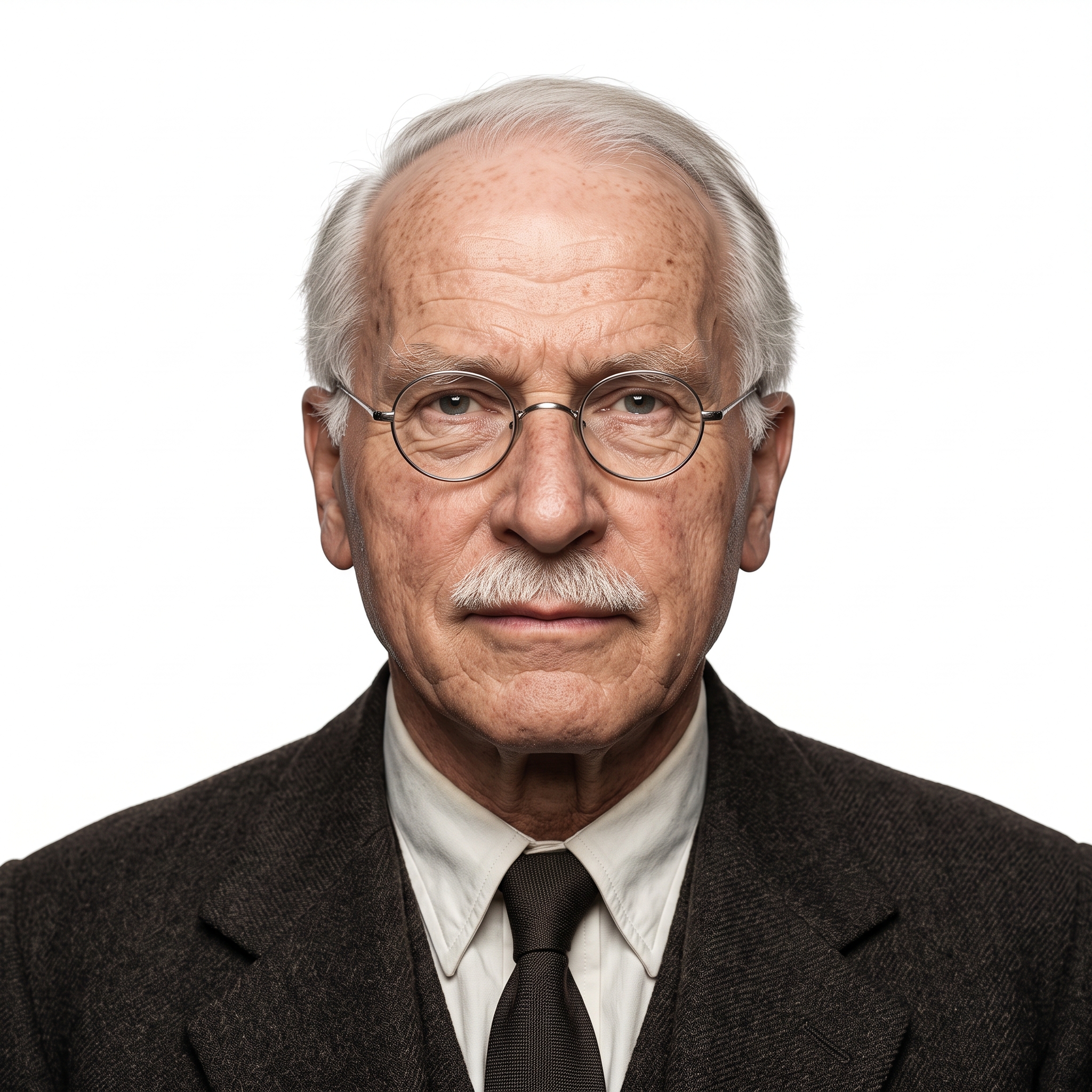
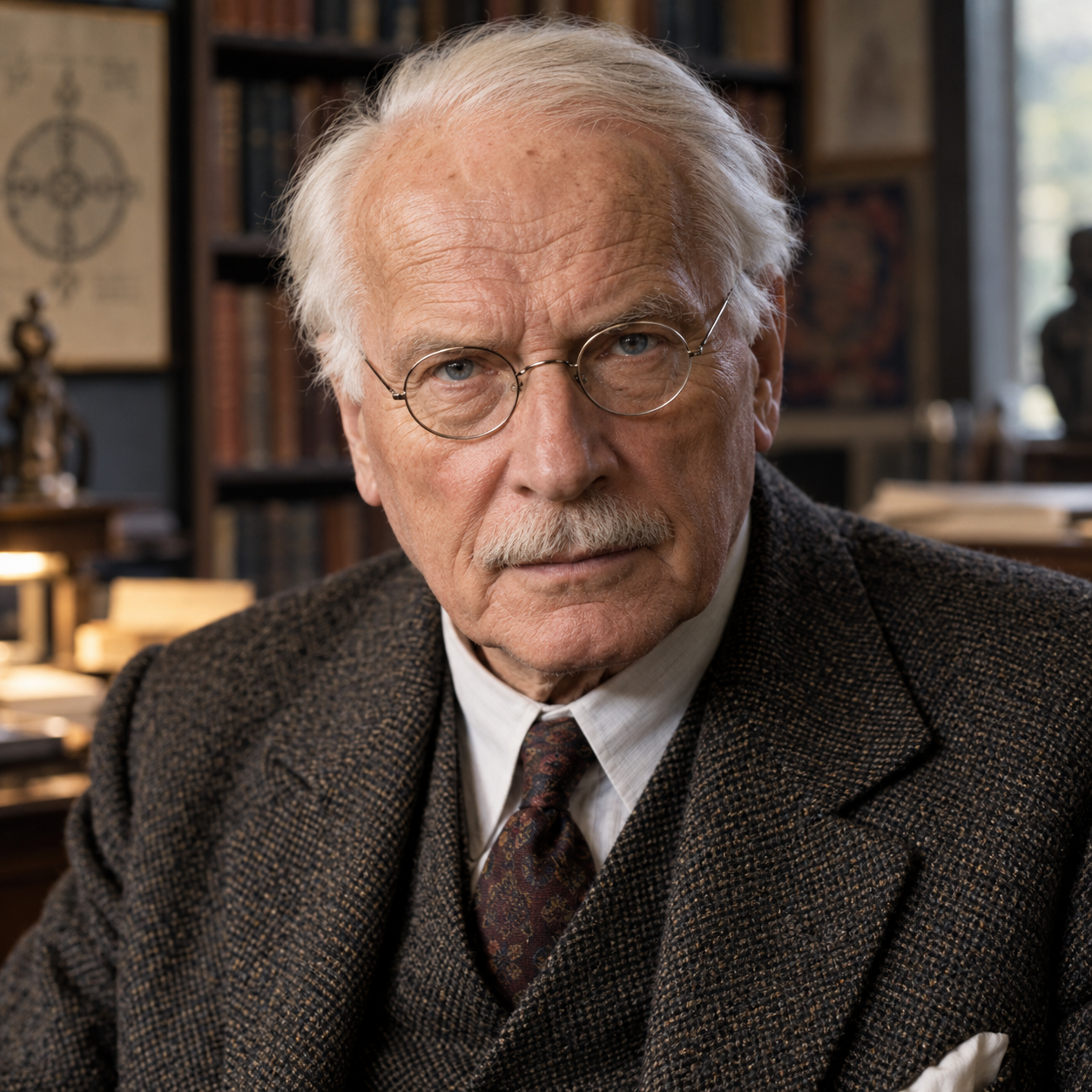
Saved editorial descriptions used for the reconstruction; these are not authenticated statements by the depicted person.
- Introspective
- Visionary
- Scholarly
- Mystical
- Empirical
- Prolific
Images & artwork 2
Known for
- Founding Analytical Psychology
- Theories of the Collective Unconscious and Archetypes
- Psychological Types (Introversion and Extraversion)
- Concept of the Individuation Process
- Development of the Synchronicity Principle
Episodes featuring or mentioning this figure
No eligible published episode featuring this figure is currently in the library.