



Werner Heisenberg
Pioneering theoretical physicist who founded quantum mechanics and formulated the famous uncertainty principle.
At a glance
- Born
- 1901 CE
- Died
- 1976 CE
- Era classification
- Modern
- Occupation
- Theoretical Physicist
- Homeland
- Germany
- Period
- 20th Century
- Field
- Science & Innovation
- Language
- German
- Religion
- Christianity (Lutheran)
- Gender
- male
Biography
Werner Karl Heisenberg was born in Würzburg, Germany, in 1901. He showed exceptional mathematical talent from an early age and studied theoretical physics under Arnold Sommerfeld at the University of Munich and Max Born at the University of Göttingen. In 1925, while recovering from severe hay fever on the North Sea island of Heligoland, Heisenberg made a seminal breakthrough by formulating quantum mechanics entirely in terms of observable spectral lines, which he, Born, and Pascual Jordan soon formalized into matrix mechanics.
In 1927, while working at Niels Bohr's institute in Copenhagen, Heisenberg published his famous uncertainty principle. The principle proved that certain pairs of physical variables, such as a particle's position and momentum, cannot be simultaneously measured with arbitrary precision. This fundamental insight reshaped modern physics, serving as a core pillar of the Copenhagen interpretation of quantum mechanics and earning Heisenberg the 1932 Nobel Prize in Physics at the age of thirty-one.
During World War II, Heisenberg chose to remain in Germany, surviving political hostility from advocates of the anti-Semitic 'Deutsche Physik' movement before being appointed to lead research in the German nuclear program (Uranprojekt). His exact intentions and the extent of his commitment to developing an atomic weapon—epitomized by his contentious 1941 meeting in Copenhagen with Niels Bohr—remain subjects of significant debate among modern historians, though the project never came close to producing a functional weapon.
Following his internment alongside other German physicists at Farm Hall in 1945, Heisenberg returned to West Germany and played a decisive role in reestablishing the nation's scientific infrastructure. He served as the director of the Max Planck Institute for Physics and as president of the Alexander von Humboldt Foundation. In his later years, he pursued a non-linear unified field theory of subatomic particles and wrote extensively on the philosophical implications of modern physics until his death in 1976.
Portrayal characteristics
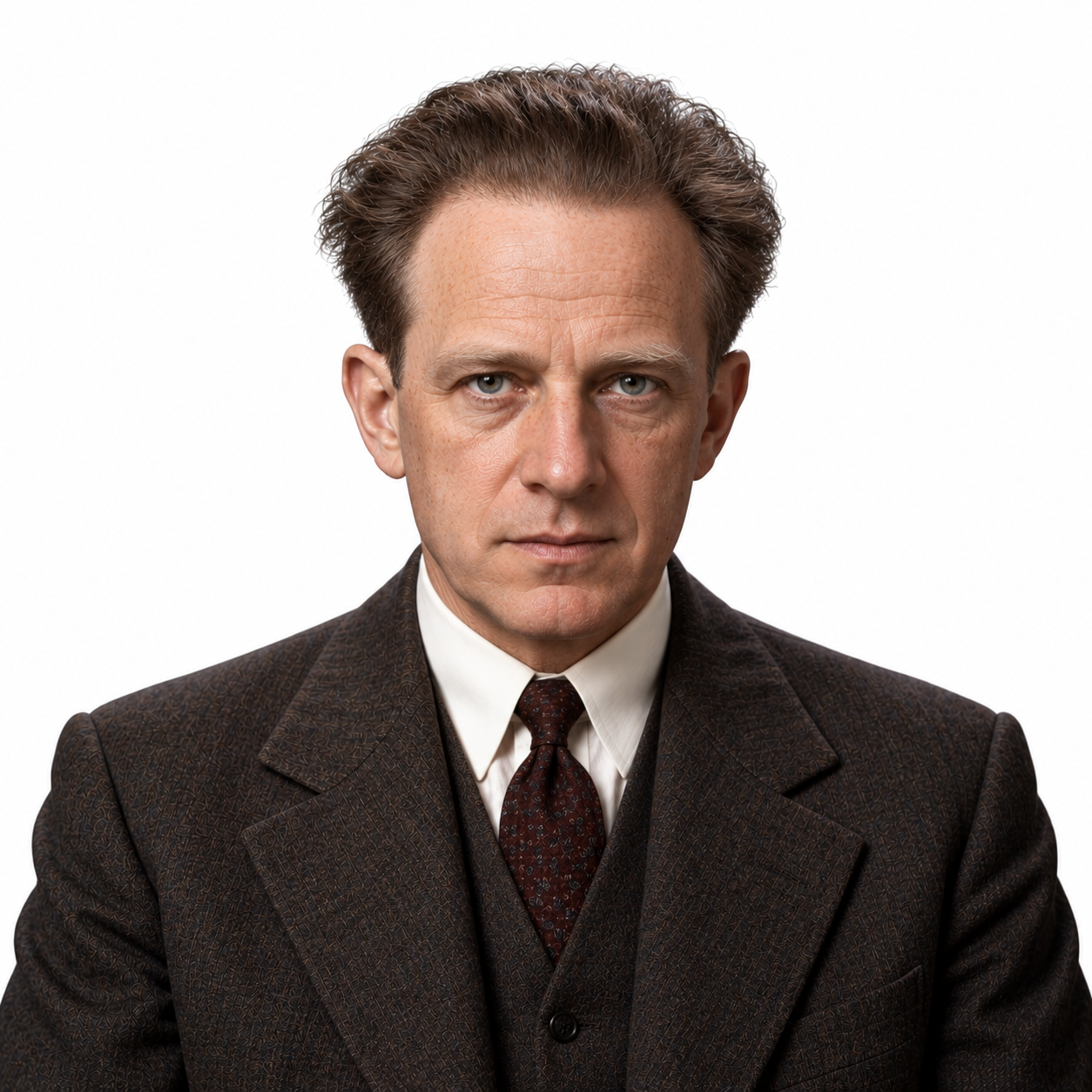
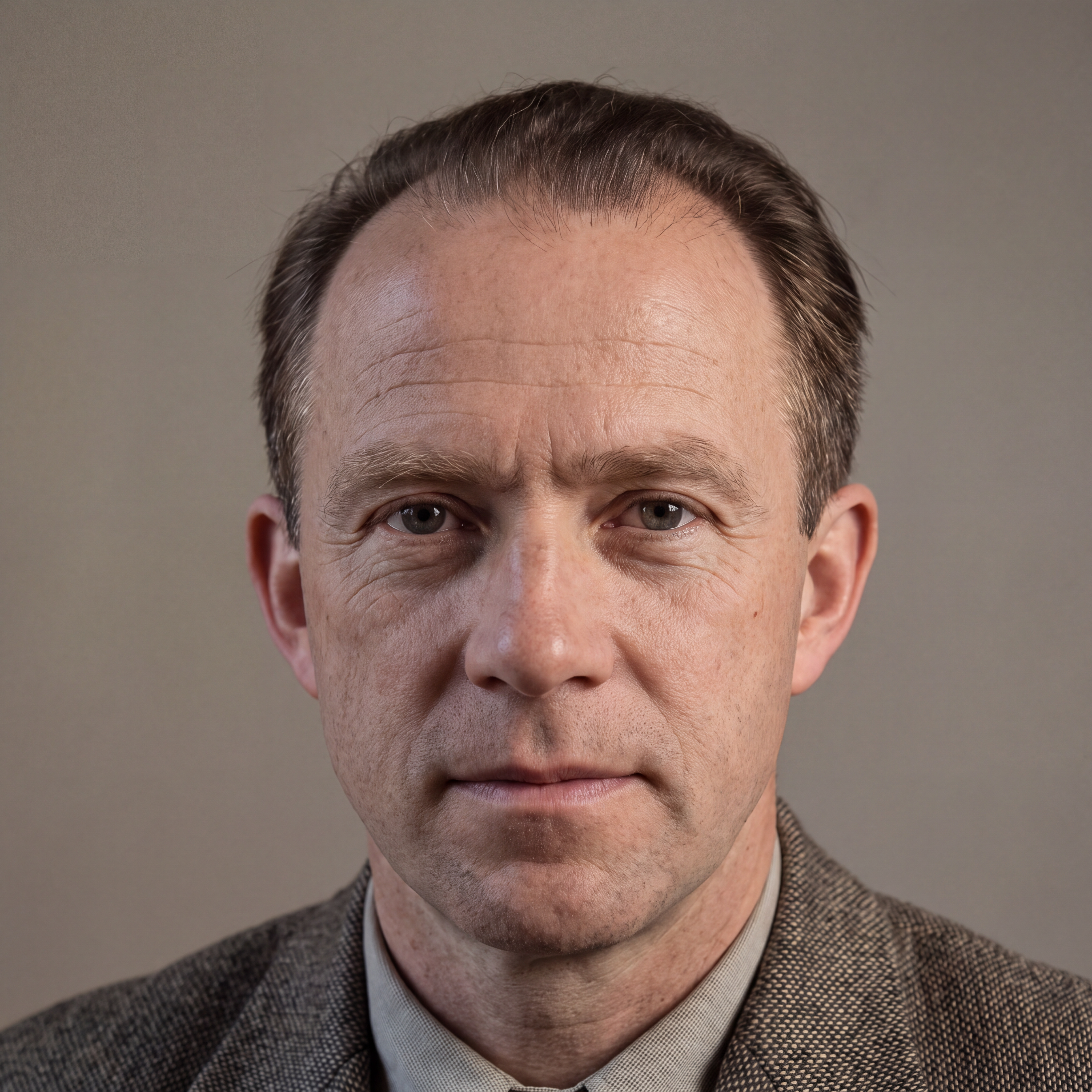
Saved editorial descriptions used for the reconstruction; these are not authenticated statements by the depicted person.
- Mathematically brilliant
- Philosophically inclined
- Intellectually ambitious
- Reserved
- Resourceful
Images & artwork 3

Known for
- Formulation of matrix mechanics
- The Heisenberg Uncertainty Principle
- 1932 Nobel Prize in Physics
- Co-developing the Copenhagen interpretation
- Post-war revival of German scientific institutions
Episodes featuring or mentioning this figure
No eligible published episode featuring this figure is currently in the library.