



Vilhelm Bjerknes
Pioneering Norwegian physicist and meteorologist who laid the foundation for modern numerical weather prediction.
At a glance
- Born
- 1862 CE
- Died
- 1951 CE
- Era classification
- Modern
- Occupation
- Physicist & Meteorologist
- Homeland
- Norway
- Period
- Late 19th to mid-20th century
- Field
- Science & Innovation
- Language
- Norwegian
- Religion
- Lutheran
- Gender
- male
Biography
Vilhelm Frimann Koren Bjerknes was born in Christiania (now Oslo), Norway, in 1862. The son of mathematician Carl Anton Bjerknes, he was introduced to fluid mechanics early in life by assisting with his father's research into hydrodynamics. Bjerknes pursued formal studies in mathematics and physics at the University of Christiania before traveling to Paris and Bonn, where he served as an assistant to Heinrich Hertz, conducting essential experimental and theoretical work on electromagnetic resonance.
In the late 1890s, Bjerknes redirected his attention to hydrodynamics and thermodynamics. In 1898, he formulated the Bjerknes circulation theorem, a fundamental fluid dynamics principle describing the generation of vorticity in fluid flows subjected to density variations. Recognizing its implications for natural systems, he published a landmark paper in 1904 proposing that weather forecasting should be treated as an initial-value problem governed by the laws of physics and mechanics, an idea that established the framework for modern numerical weather forecasting.
During World War I, Bjerknes established the Bergen School of Meteorology at the Geophysical Institute in Bergen, Norway. There, he assembled a brilliant team of young researchers, including his son Jacob Bjerknes, Halvor Solberg, and Tor Bergeron. Together, they developed the concept of atmospheric air masses and introduced the polar front theory of cyclones, revolutionizing synoptic meteorology and providing practical tools for aviation and maritime navigation.
Bjerknes subsequently held professorships at the University of Leipzig and the University of Oslo, continuing his theoretical investigations and mentoring generations of geophysicists. His conceptual model of mathematical weather prediction predated practical computing power, but it directly inspired later breakthroughs in computational fluid dynamics and computer-based atmospheric modeling before his death in 1951.
Portrayal characteristics
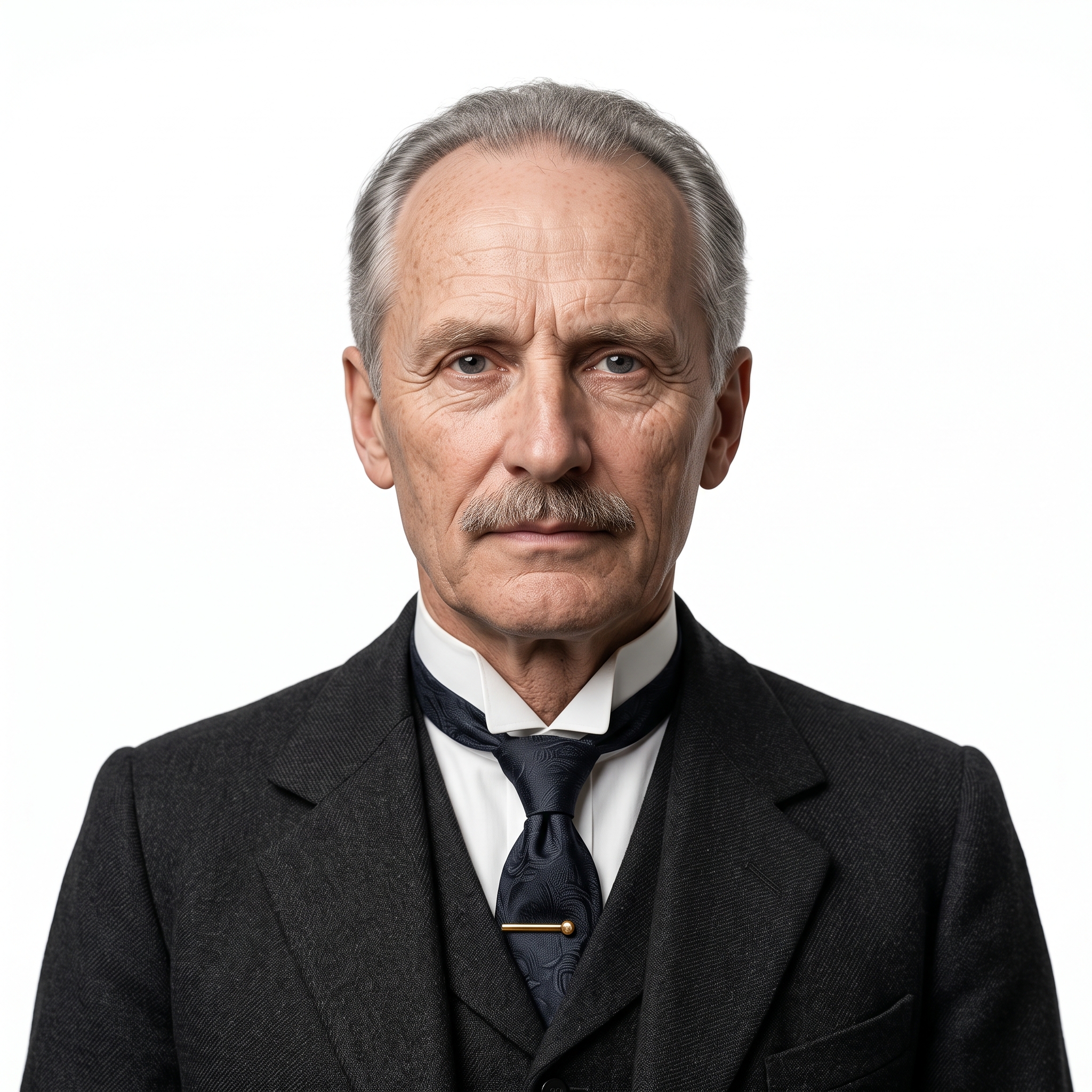
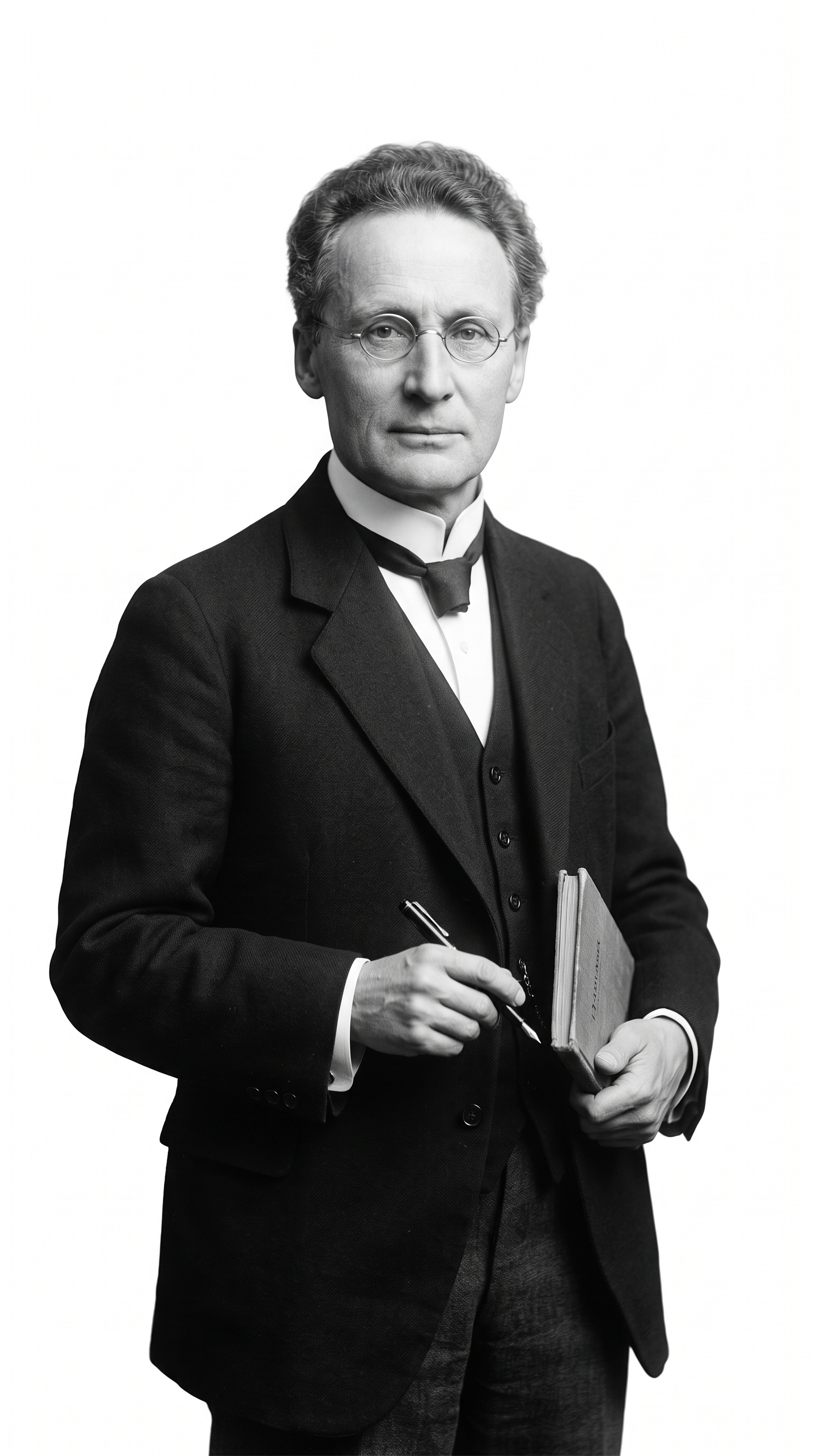
Saved editorial descriptions used for the reconstruction; these are not authenticated statements by the depicted person.
- Methodical
- Collaborative
- Visionary
- Analytic
- Rigorous
Images & artwork 2
Known for
- Bjerknes circulation theorem
- Founding the Bergen School of Meteorology
- Proposing numerical weather prediction
- Polar front theory of mid-latitude cyclones
- Physical hydrodynamics applied to geophysics
Episodes featuring or mentioning this figure
No eligible published episode featuring this figure is currently in the library.