



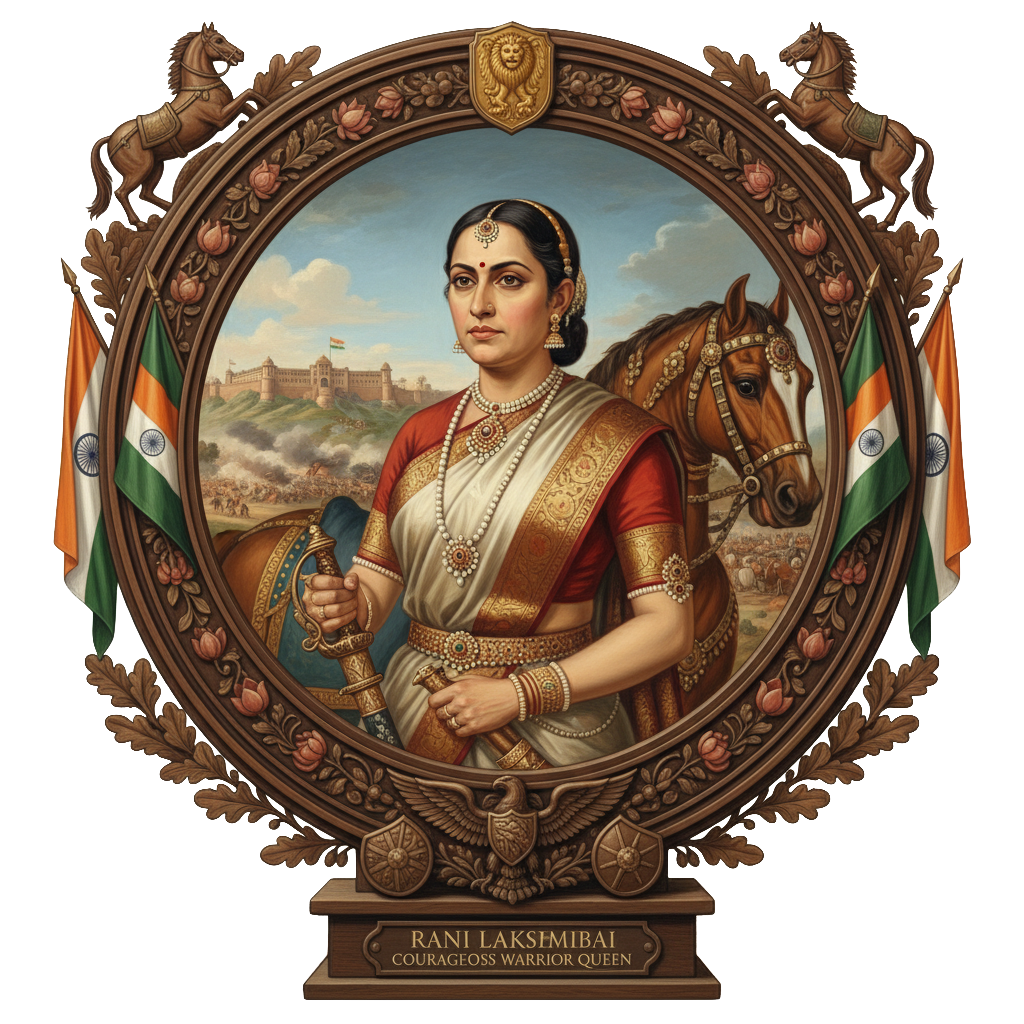
Rani Lakshmibai
The Queen of Jhansi and a leading figure of the Indian Rebellion of 1857 who became a symbol of resistance.
At a glance
- Born
- 1828 CE
- Died
- 1858 CE
- Era classification
- Modern
- Homeland
- Jhansi (India)
- Period
- 19th Century CE
- Field
- Warriors & Legends
- Language
- Marathi
- Religion
- Hinduism
- Gender
- female
Biography
Rani Lakshmibai, born Manikarnika Tambe, was the queen of the Maratha princely state of Jhansi in North India. Trained in martial arts, sword fighting, and horse riding from a young age, she defied the traditional expectations of women in her era. Following the death of her husband, the Maharaja of Jhansi, the British East India Company applied the Doctrine of Lapse to annex her kingdom, refusing to recognize her adopted son as the legal heir.
Refusing to cede her territory, Lakshmibai famously declared, 'I shall not surrender my Jhansi.' When the Indian Rebellion of 1857 erupted, she quickly emerged as one of its most prominent and formidable leaders. She fortified Jhansi and assembled a volunteer army, which included women, to defend her city against the besieging British forces. Her fierce resistance and tactical acumen earned her the grudging respect of her enemies.
After Jhansi fell, she escaped and joined forces with other rebel leaders, continuing to fight valiantly in several battles across central India. She died in combat near Gwalior, dressed as a cavalry leader. Her martyrdom elevated her to the status of a national hero, and she remains an enduring icon of Indian independence and female bravery.
Portrayal characteristics
Saved editorial descriptions used for the reconstruction; these are not authenticated statements by the depicted person.
- Courageous
- Defiant
- Resilient
- Inspiring
- Martial
Images & artwork 3
Connections
Mahatma Gandhi
Inspirational Figure
Mahatma Gandhi frequently cited Rani Lakshmibai as a symbol of Indian resistance and female bravery.
During the Indian independence movement, Gandhi and other leaders invoked the memory of the Rani of Jhansi to inspire nationalist sentiment against British colonial rule. Her 1857 rebellion served as a foundational narrative for the later non-violent and revolutionary movements led by Gandhi.
Rabindranath Tagore
Cultural Legacy
Tagore celebrated the heroism of Rani Lakshmibai in his literary works and historical reflections.
As a key figure of the Bengal Renaissance, Tagore viewed Lakshmibai as a tragic and heroic figure of Indian history. Her defiance against the British East India Company was a recurring theme in the cultural revivalism that Tagore helped lead in the late 19th and early 20th centuries.
Known for
- Indian Rebellion of 1857
- Defense of Jhansi
- Symbol of Indian Independence
- Defying the Doctrine of Lapse
Episodes featuring or mentioning this figure
No eligible published episode featuring this figure is currently in the library.