



Fritz Haber
German chemist who invented the Haber-Bosch ammonia process and pioneered chemical weapons in World War I.
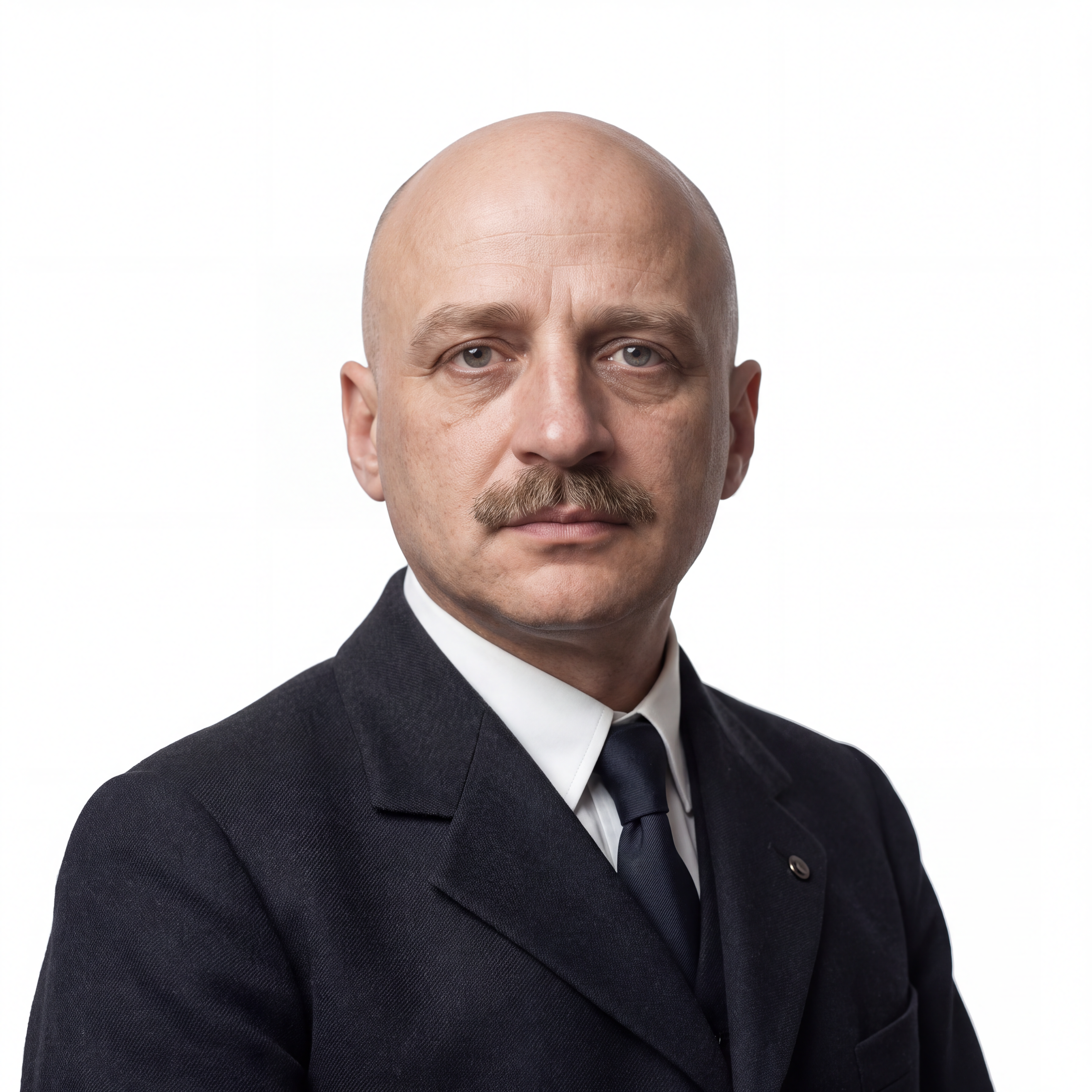
At a glance
- Born
- 1868 CE
- Died
- 1934 CE
- Era classification
- Modern
- Occupation
- Chemist
- Homeland
- Germany
- Period
- Late 19th - early 20th century
- Field
- Science & Innovation
- Language
- German
- Religion
- Lutheranism (converted from Judaism)
- Gender
- male
Biography
Fritz Haber was born in 1868 in Breslau, Prussia (now Wrocław, Poland), into an assimilated German-Jewish family. He pursued higher education in chemistry at the University of Heidelberg under Robert Bunsen, later studying at the University of Berlin and the Technische Hochschule Charlottenburg. In 1894, he joined the faculty of the Karlsruhe Institute of Technology, where he conducted foundational research in electrochemistry, gas equilibria, and thermodynamics, establishing his reputation as a brilliant physical chemist.
In the early 1900s, Haber achieved his most significant scientific breakthrough: the high-pressure catalytic synthesis of ammonia from atmospheric nitrogen and hydrogen gas. Scaled up industrially by Carl Bosch and the chemical firm BASF, the Haber-Bosch process overcame the global shortage of fixed nitrogen. This innovation revolutionized agriculture by enabling the mass production of synthetic fertilizers, ultimately sustaining global population growth, while also providing Germany with a domestic supply of nitrates for explosives. For this achievement, Haber was awarded the 1918 Nobel Prize in Chemistry.
During World War I, Haber placed his scientific expertise entirely at the service of the German military. Appointed head of the Chemistry Section in the Ministry of War, he actively directed the research and battlefield deployment of poisonous gases, overseeing the first large-scale chlorine gas attack at the Second Battle of Ypres in April 1915. He argued that chemical warfare could shorten the war and save lives, an endeavor that caused profound friction with his wife, chemist Clara Immerwahr, who took her own life in 1915.
In the interwar era, Haber directed the prestigious Kaiser Wilhelm Institute for Physical Chemistry and Electrochemistry in Berlin. Following the rise of Adolf Hitler's National Socialist regime in 1933, anti-Semitic laws forced the dismissal of Jewish scientists. Although Haber was initially exempt due to his wartime service, he refused to discharge his Jewish colleagues and resigned in protest. In poor health and effectively in exile, Haber died in Basel, Switzerland, in January 1934 while en route to a proposed post in Mandatory Palestine.
Portrayal characteristics
Saved editorial descriptions used for the reconstruction; these are not authenticated statements by the depicted person.
- Ambitious
- Methodical
- Patriotic
- Pragmatic
- Intellectually rigorous
Images & artwork 1
Known for
- Invention of the Haber-Bosch process for synthesizing ammonia
- 1918 Nobel Prize in Chemistry
- Formulation of the Born-Haber cycle
- Pioneering military deployment of chemical warfare in WWI
- Directorship of the Kaiser Wilhelm Institute for Physical Chemistry
Episodes featuring or mentioning this figure
No eligible published episode featuring this figure is currently in the library.