



Epicurus
Ancient Greek philosopher who founded Epicureanism, advocating tranquility and modest pleasure as the highest good.

At a glance
- Born
- 341 BCE
- Died
- 270 BCE
- Era classification
- Ancient
- Occupation
- Philosopher
- Homeland
- Ancient Greece
- Period
- Hellenistic Period
- Field
- Philosophy & Ideology
- Language
- Ancient Greek
- Religion
- Ancient Greek Religion (Deistic Atomism)
- Gender
- male
Biography
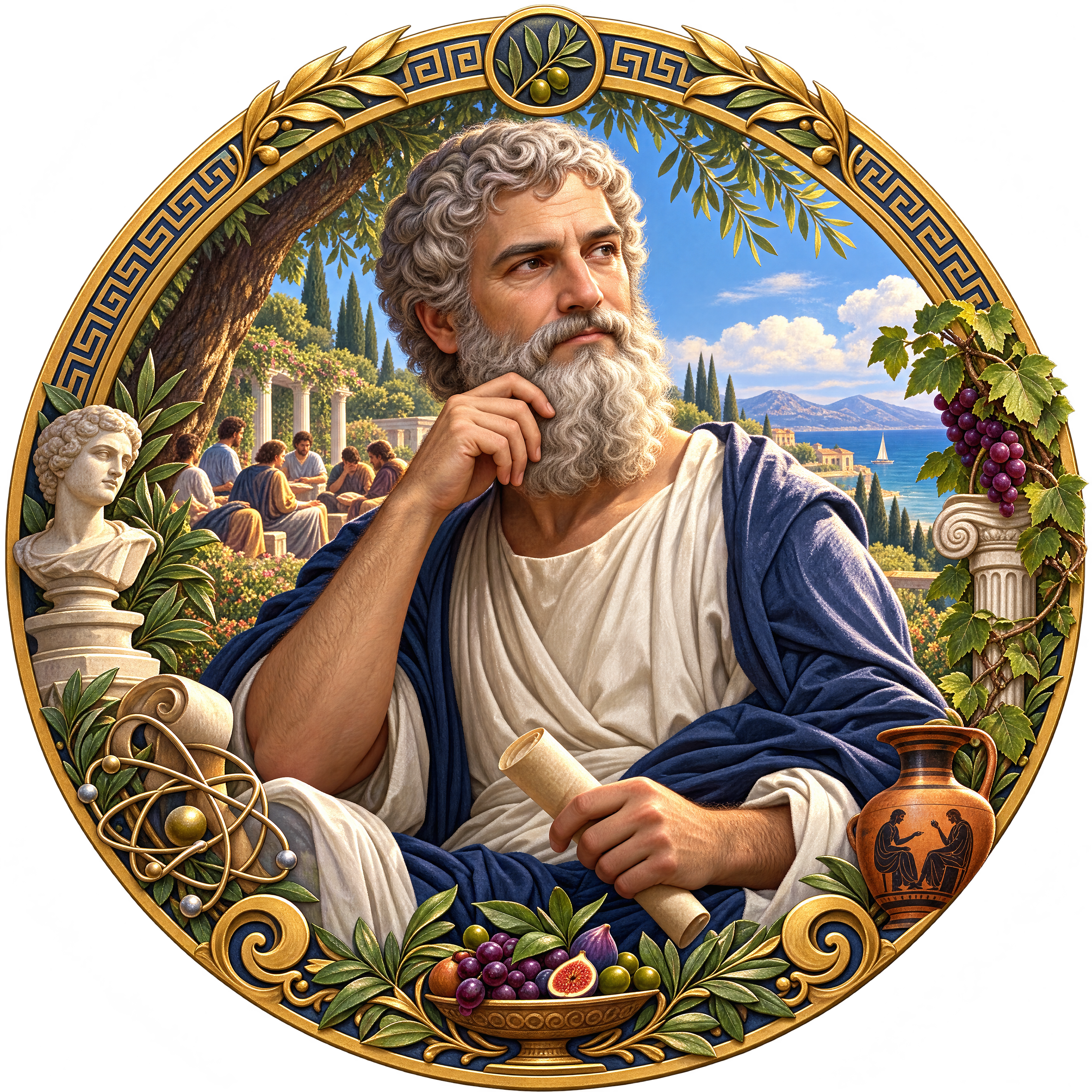
Epicurus was born around 341 BCE on the Aegean island of Samos to Athenian parents. After completing mandatory military service in Athens, he studied philosophy under disciples of Democritus and Pamphilus the Platonist. Developing his own distinct worldview early on, he began teaching in Mytilene and Lampsacus before returning to Athens around 306 BCE to establish his own philosophical community.
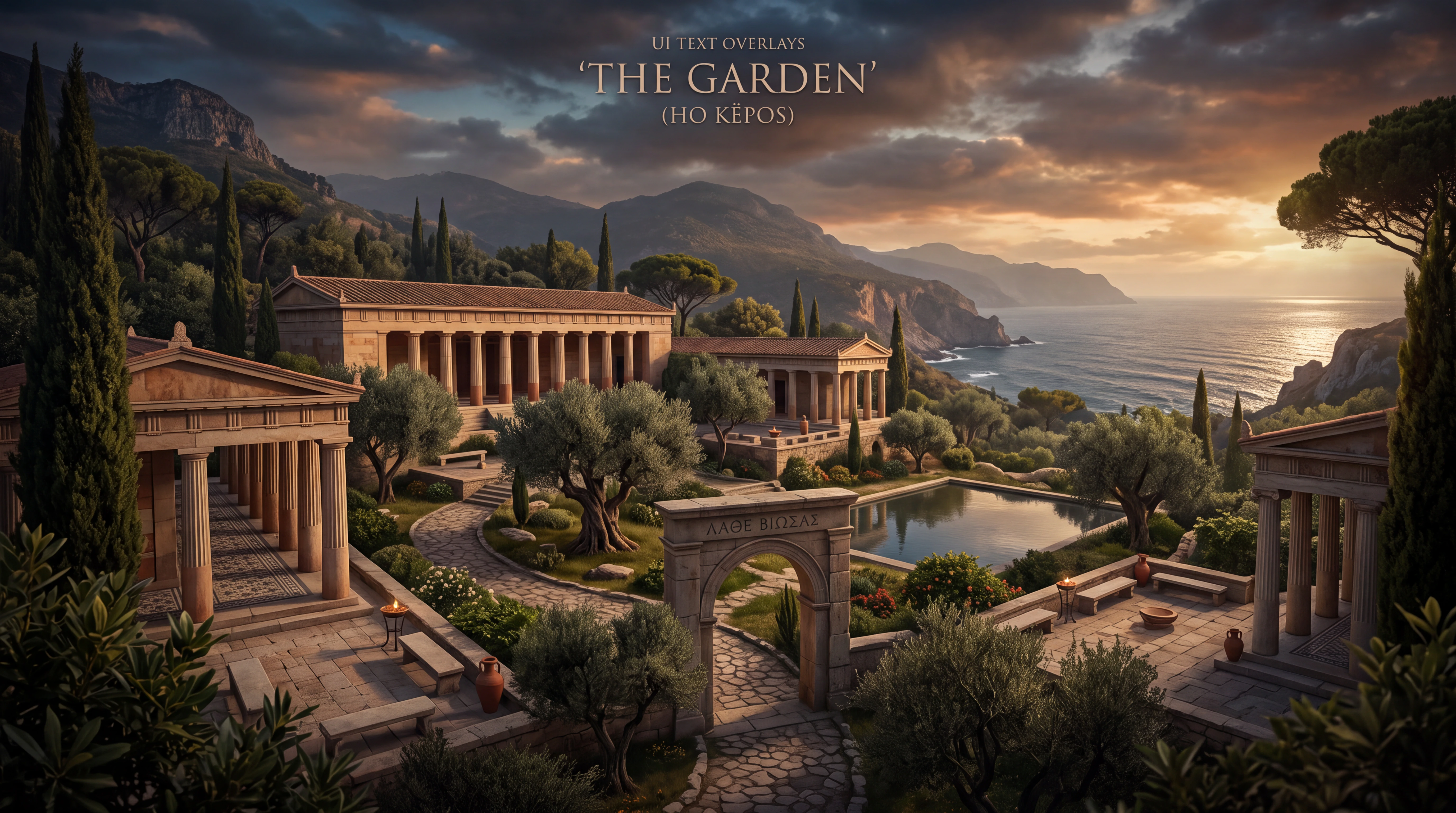
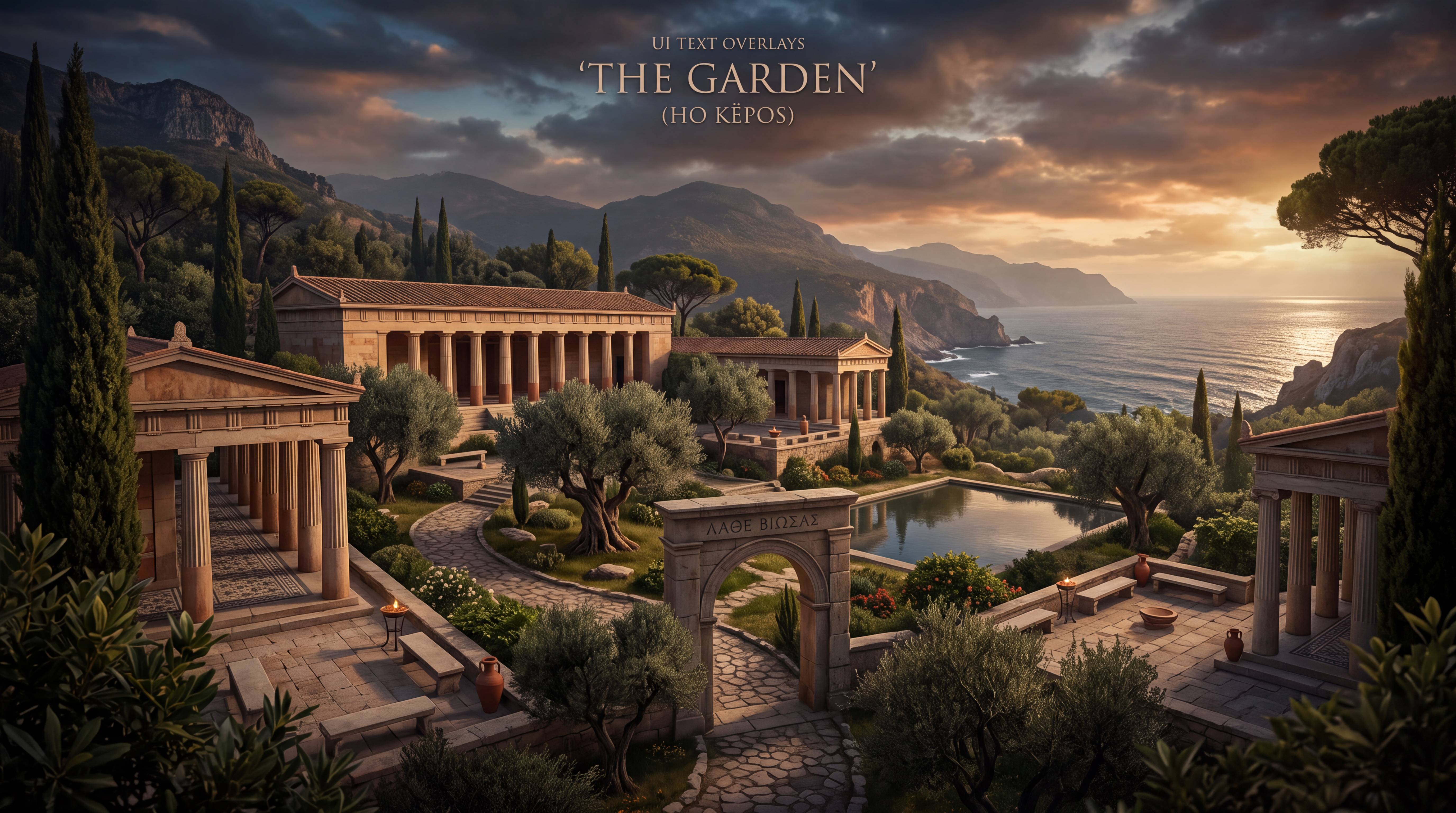
In Athens, Epicurus purchased a property with a walled garden that became known simply as 'The Garden.' Unlike rival institutions like Plato's Academy or Aristotle's Lyceum, Epicurus's school was egalitarian and communal, famously welcoming women, enslaved individuals, and foreigners. The Garden served as a quiet retreat dedicated to philosophic conversation, mutual friendship, and a simple communal lifestyle away from the tumult of public politics.
Epicurus formulated a comprehensive philosophical system that merged materialist physics with practical ethics. Drawing from Democritus, he argued that the universe consists entirely of indivisible atoms and empty void, introducing the idea of the atomic 'swerve' (clinamen) to account for free will. In ethics, he taught that the ultimate aim of life is 'ataraxia' (tranquility and freedom from fear) and 'aponia' (absence of bodily pain). Far from advocating mindless indulgence, Epicurus emphasized modest, sustainable pleasures and the dispelling of irrational fears, particularly the fear of death and divine retribution.
Epicurus died in Athens in 270 BCE from kidney stones, enduring his final days with characteristic serenity. His philosophy flourished for centuries across the Mediterranean, immortalized in Lucretius's epic poem 'De Rerum Natura,' and deeply influenced Renaissance humanists, early modern scientists like Pierre Gassendi, and Enlightenment thinkers like Thomas Jefferson.
Portrayal characteristics
Saved editorial descriptions used for the reconstruction; these are not authenticated statements by the depicted person.
- Rationalist
- Egalitarian
- Compassionate
- Serene
- Pragmatic
- Inquisitive
Images & artwork 4
Known for
- Founding the philosophical school of Epicureanism
- Concept of Ataraxia (freedom from mental turmoil)
- Development of atomic theory and the atomic swerve (clinamen)
- Founding 'The Garden' egalitarian community
- Formulation of the Epicurean Paradox regarding the problem of evil
Episodes featuring or mentioning this figure
No eligible published episode featuring this figure is currently in the library.