



Steven Paul Jobs
He co-founded Apple and transformed personal computing, digital music, animated films, and mobile phones.

At a glance
- Born
- 24 February 1955 CE
- Died
- 5 October 2011 CE
- Era classification
- 56
- Occupation
- Scientist (General)
- Homeland
- United States
- Period
- 1955 CE - 2011 CE
- Field
- Science & Innovation
- Language
- English
- Religion
- Zen Buddhism
- Gender
- male
Biography
Steven Paul Jobs was born in San Francisco, California, on 24 February 1955 to Abdulfattah Jandali and Joanne Schieble, and was adopted in infancy by Paul and Clara Jobs. Raised in the burgeoning technological corridor of Santa Clara County, he developed an early fascination with mechanics, electronics, and aesthetics. After graduating from Homestead High School in Cupertino, Jobs enrolled at Reed College in Portland, Oregon, but dropped out after one semester, auditing classes such as calligraphy that later influenced his visual sensibility. In 1974, he traveled through India seeking spiritual guidance, an experience that deepened his lifelong commitment to Zen Buddhism, which he practiced under the guidance of teacher Kobun Chino Otogawa.
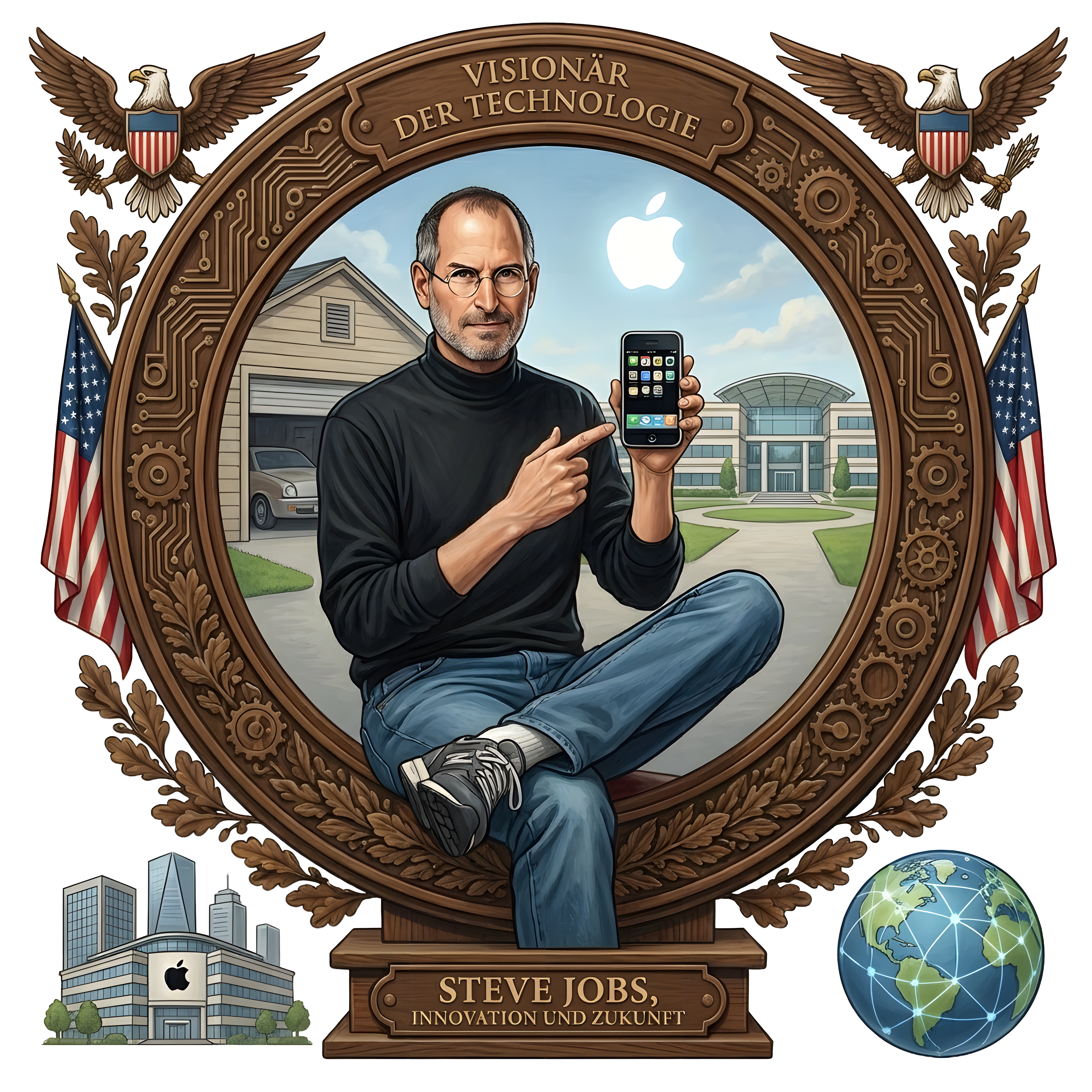
Upon returning to California, Jobs reconnected with Steve Wozniak, who had engineered a compact personal computer. In 1976, Jobs, Wozniak, and Ronald Wayne founded Apple Computer in the Jobs family garage. While Wozniak provided technical engineering, Jobs envisioned personal computing as an accessible consumer appliance. The Apple II achieved widespread commercial success, propelling the company into public ownership. Jobs subsequently directed development of the Macintosh, released in 1984 with a revolutionary graphical user interface. However, high prices, lagging software support, and escalating executive friction with Chief Executive Officer John Sculley led to Jobs being stripped of managerial duties and departing Apple in 1985.
Jobs promptly founded NeXT Inc. to develop sophisticated academic and enterprise workstations, introducing an object-oriented operating system that proved commercially limited but technically foundational. Concurrently, in 1986, he purchased a controlling interest in the computer animation division of Lucasfilm, renaming it Pixar Animation Studios. With the release of Toy Story in 1995, Pixar achieved critical and financial triumphs, turning Jobs into a billionaire. Struggling with its own operating system development, Apple acquired NeXT in late 1996, returning Jobs to the company he had helped create and paving the way for his appointment as interim chief executive in 1997.
Back at Apple, Jobs drastically trimmed unprofitable projects and focused on design excellence, initiating a historic corporate turnaround. Under his leadership, Apple unveiled a succession of industry-defining consumer products, including the iMac, iPod, iPhone, and iPad, alongside digital ecosystems like iTunes and the App Store. Jobs championed end-to-end integration of hardware and software, transforming telecommunications, retail, and digital media. His exacting standards and demanding management style also drew criticism, as did Apple's closed ecosystem policies and overseas labor conditions within its supply chain.
Diagnosed with a rare neuroendocrine tumor of the pancreas in 2003, Jobs initially postponed surgery in favor of alternative therapies before undergoing an operation in 2004 and a subsequent liver transplant. Despite worsening health, he maintained active leadership until resigning as chief executive in August 2011. Jobs died at his home in Palo Alto on 5 October 2011 at the age of 56. His vision transformed personal technology into an intuitive, design-driven part of daily modern life.
Portrayal characteristics
Saved editorial descriptions used for the reconstruction; these are not authenticated statements by the depicted person.
- Visionary
- Perfectionist
- Charismatic
- Demanding
- Intuitive
Images & artwork 4


Known for
- Co-founding Apple Inc.
- Development of the Macintosh
- Creation of the iPhone and iPad
- Leadership of Pixar Animation Studios
- Introduction of the iPod and iTunes
Episodes featuring or mentioning this figure
No eligible published episode featuring this figure is currently in the library.