



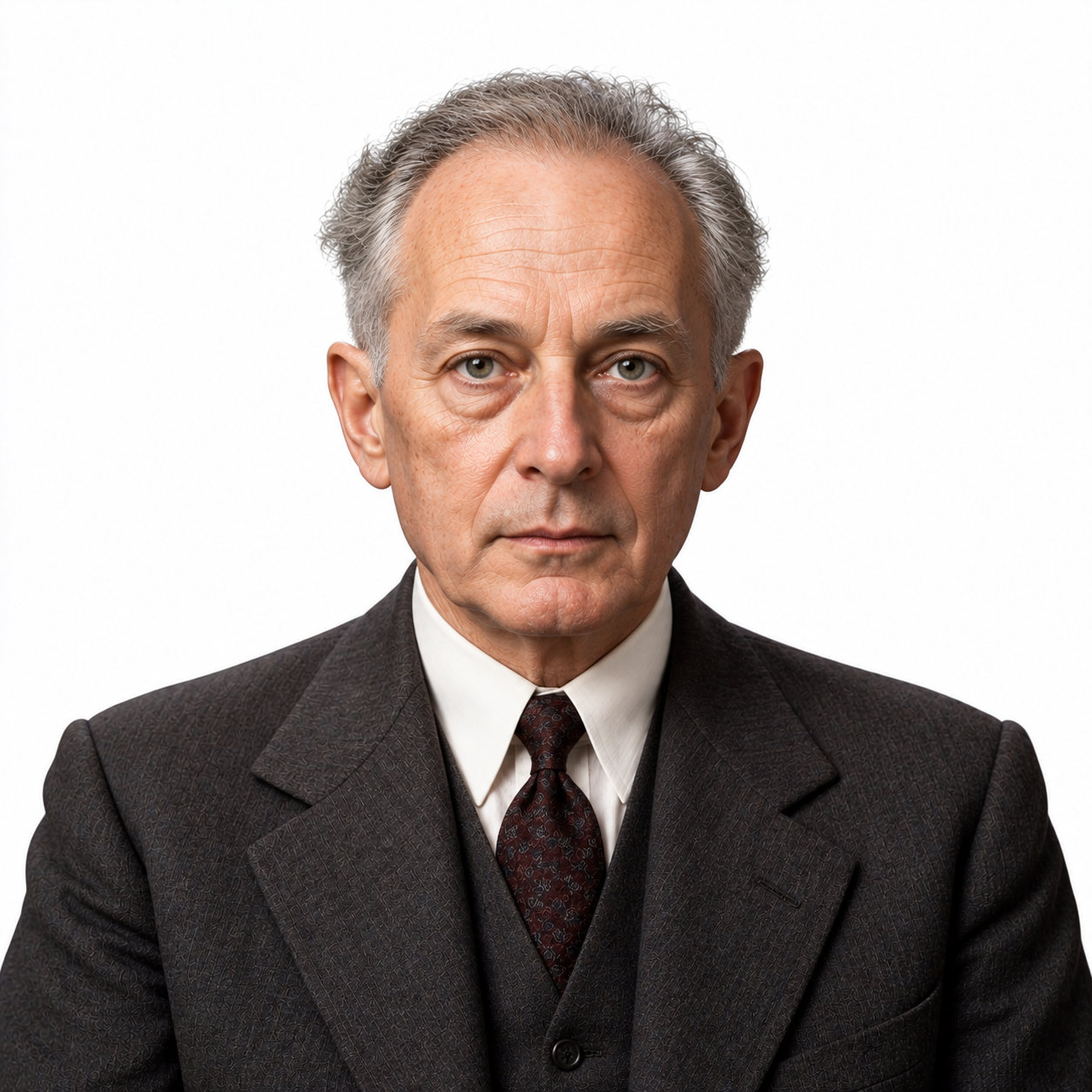
Max Born
Nobel Prize-winning German physicist who formulated the statistical probability interpretation of wave mechanics.
At a glance
- Born
- 1882 CE
- Died
- 1970 CE
- Era classification
- Modern
- Occupation
- Theoretical Physicist
- Homeland
- Germany
- Period
- Late 19th to Mid-20th Century
- Field
- Science & Innovation
- Language
- German
- Religion
- Lutheranism (raised in Judaism)
- Gender
- male
Biography
Max Born was born in Breslau, Silesia (now Wrocław, Poland) into an intellectual family. He pursued higher education in mathematics and the physical sciences at the universities of Breslau, Heidelberg, and Zurich before completing his doctorate under Carl Runge at the University of Göttingen in 1906. At Göttingen, he worked closely with preeminent mathematicians including David Hilbert and Hermann Minkowski, developing an aptitude for applying advanced mathematical structures to physical phenomena, particularly in crystal lattices and electrodynamics.
After holding appointments in Berlin and Frankfurt, Born returned to Göttingen in 1921 as professor and director of the Institute of Theoretical Physics, transforming it into one of the world's foremost centers for modern physics. In 1925, collaborating with Werner Heisenberg and Pascual Jordan, Born helped formulate matrix mechanics, the first complete mathematical formulation of quantum theory. In 1926, Born introduced his most famous insight: the statistical interpretation of the quantum wave function, proposing that the squared modulus of the wave function denotes the probability density of finding a particle at a given point in space, for which he was awarded the Nobel Prize in Physics in 1954.
In 1933, the Nazi regime suspended Born from his university post due to his Jewish ancestry, compelling him to emigrate to the United Kingdom. He held a lectureship at the University of Cambridge before being appointed Tait Professor of Natural Philosophy at the University of Edinburgh in 1936, a chair he occupied until his retirement in 1953. In his post-retirement years in Bad Pyrmont, West Germany, Born engaged deeply with the ethical and political dilemmas created by modern science, co-signing the 1955 Russell–Einstein Manifesto and campaigning against nuclear weapons until his death in Göttingen in 1970.
Portrayal characteristics
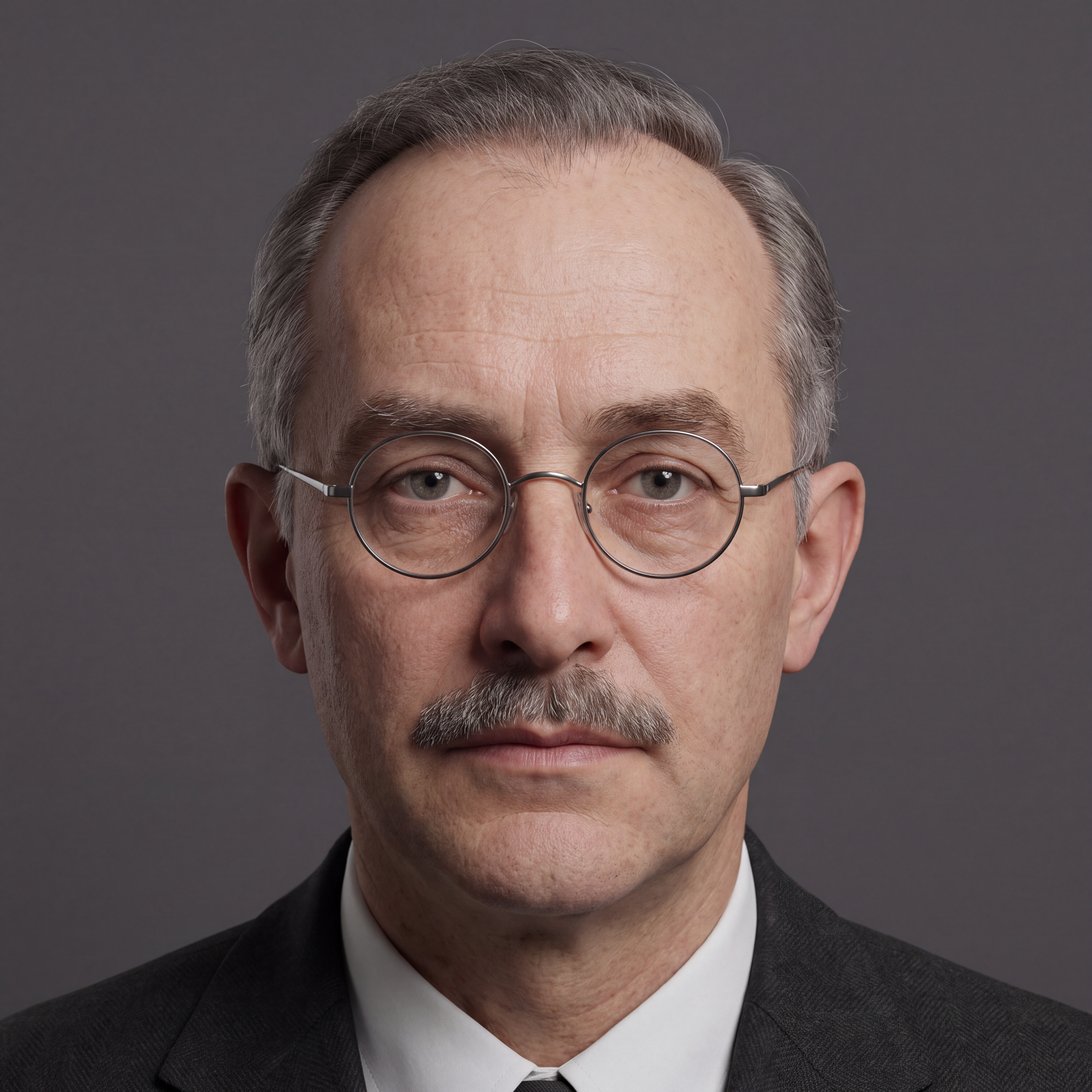
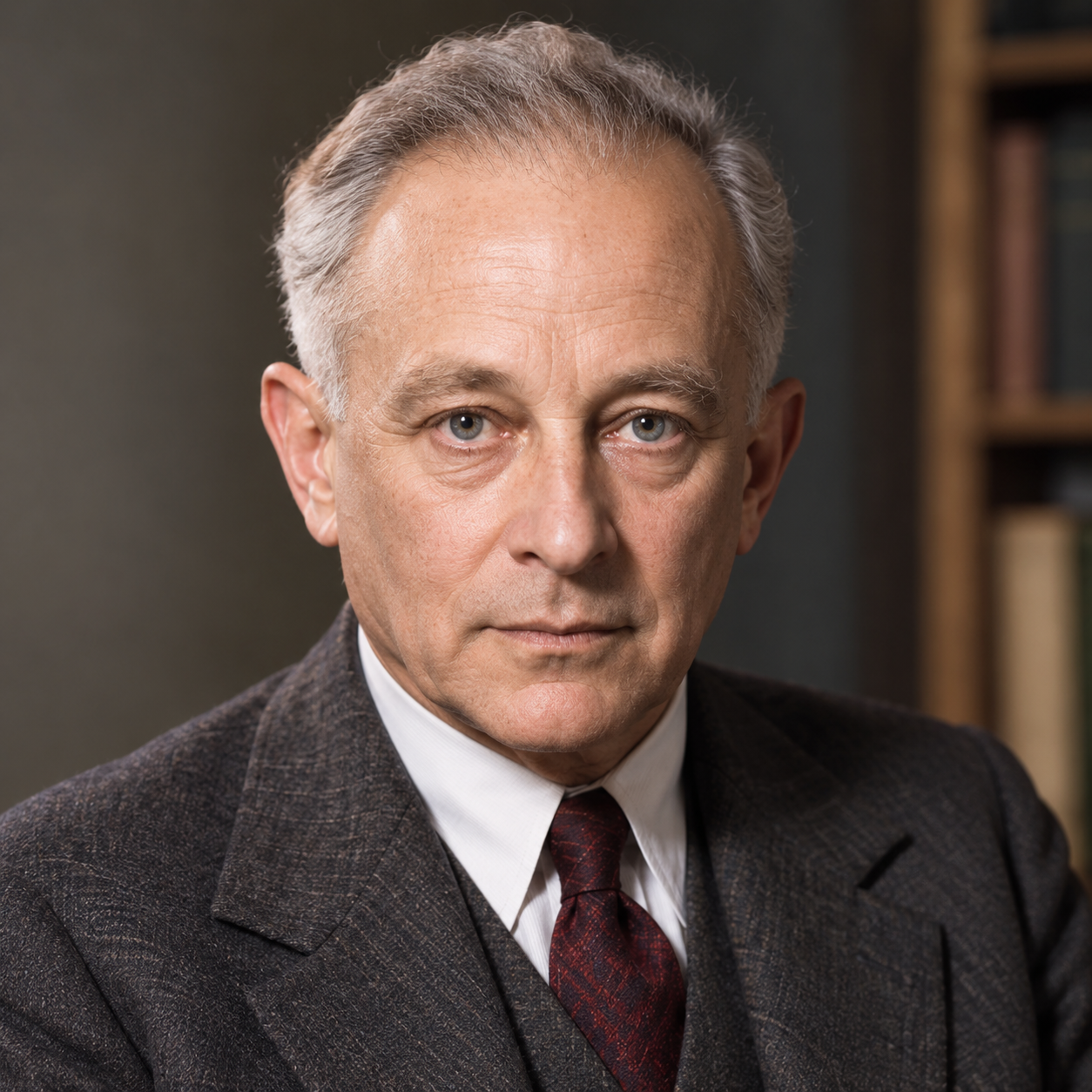
Saved editorial descriptions used for the reconstruction; these are not authenticated statements by the depicted person.
- Mathematically rigorous
- Collaborative mentor
- Pacifist
- Philosophically reflective
- Methodical
Images & artwork 3
Known for
- Born rule (probabilistic interpretation of quantum wave functions)
- Matrix mechanics formulation with Heisenberg and Jordan
- Born-Oppenheimer approximation in molecular physics
- Born-Haber cycle in physical chemistry
- 1954 Nobel Prize in Physics
Episodes featuring or mentioning this figure
No eligible published episode featuring this figure is currently in the library.