



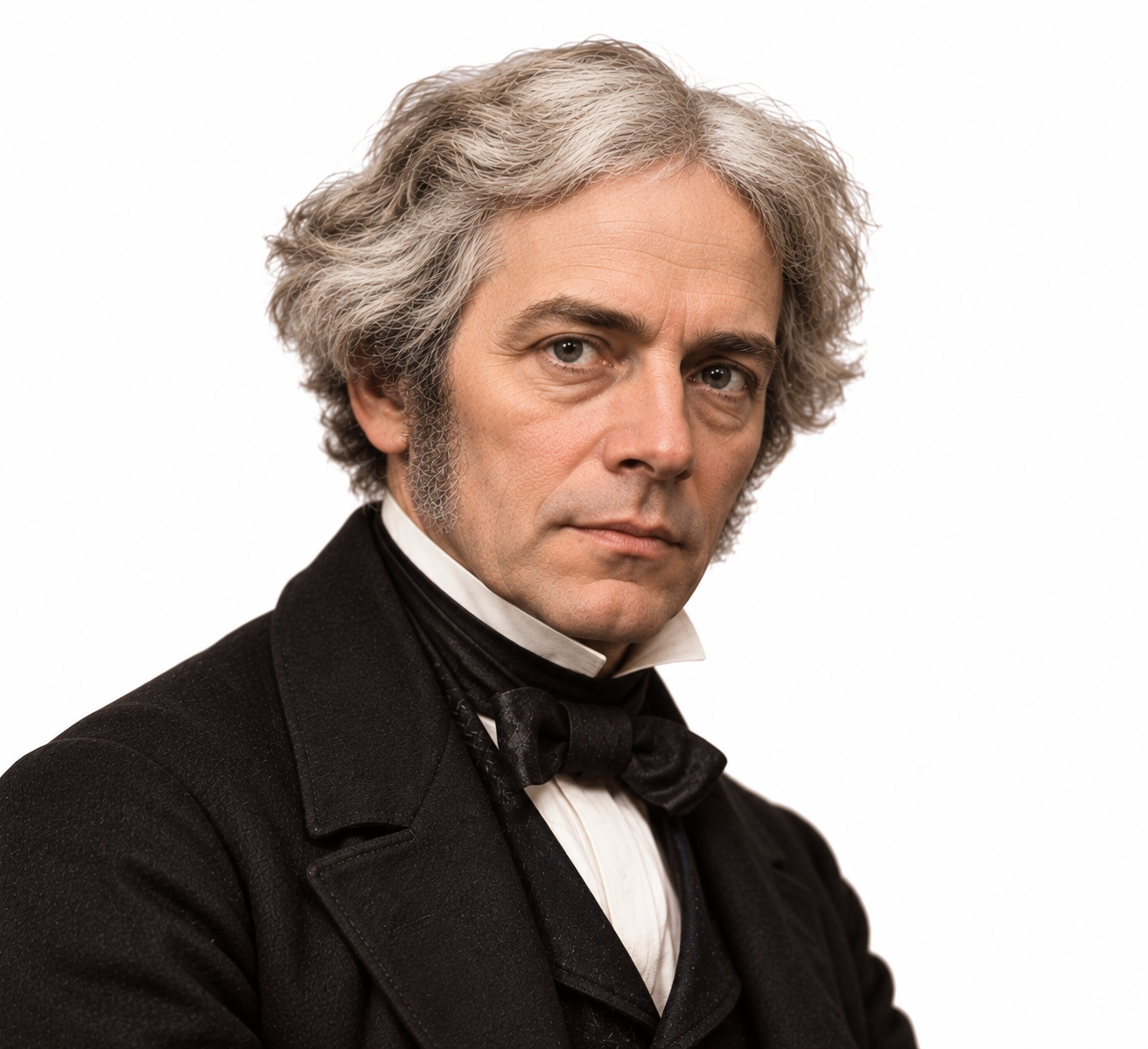
Michael Faraday
English scientist who pioneered electromagnetism and electrochemistry, discovering electromagnetic induction.
At a glance
- Born
- 1791 CE
- Died
- 1867 CE
- Era classification
- Modern
- Occupation
- Scientist (General)
- Homeland
- United Kingdom
- Period
- 19th Century
- Field
- Science & Innovation
- Language
- English
- Religion
- Christianity (Sandemanian)
- Gender
- male
Biography
Michael Faraday was born in 1791 in Newington Butts, Surrey (now part of London), into a humble working-class family. With minimal formal schooling, he educated himself while serving as an apprentice to a local bookbinder for seven years, reading voraciously on scientific subjects. His breakthrough occurred in 1812 when he attended lectures by the famed chemist Humphry Davy at the Royal Institution. Faraday presented Davy with a meticulously bound notebook of his lecture notes, earning himself an appointment as Davy's laboratory assistant in 1813.
At the Royal Institution, Faraday rapidly advanced from lab assistant to one of the most prolific experimentalists in history. In 1821, he discovered electromagnetic rotation, the foundational principle behind the electric motor. His most landmark discovery followed in 1831: electromagnetic induction, demonstrating that a changing magnetic field produces an electric current, which made the modern electric generator and transformer possible. Beyond physics, Faraday made fundamental contributions to chemistry, including isolating benzene, inventing an early form of the Bunsen burner, and establishing the laws of electrolysis.
A man of profound humility and deep Sandemanian Christian faith, Faraday repeatedly declined honors such as a knighthood and the presidency of the Royal Society, preferring to remain a dedicated public servant of science. He was a passionate science communicator who inaugurated the prestigious Royal Institution Christmas Lectures for young audiences in 1825. Faraday died at Hampton Court in 1867, leaving a legacy that profoundly reshaped modern physics and technology.
Portrayal characteristics
Saved editorial descriptions used for the reconstruction; these are not authenticated statements by the depicted person.
- Inquisitive
- Methodical
- Humble
- Persevering
- Visionary
- Self-taught
Images & artwork 2
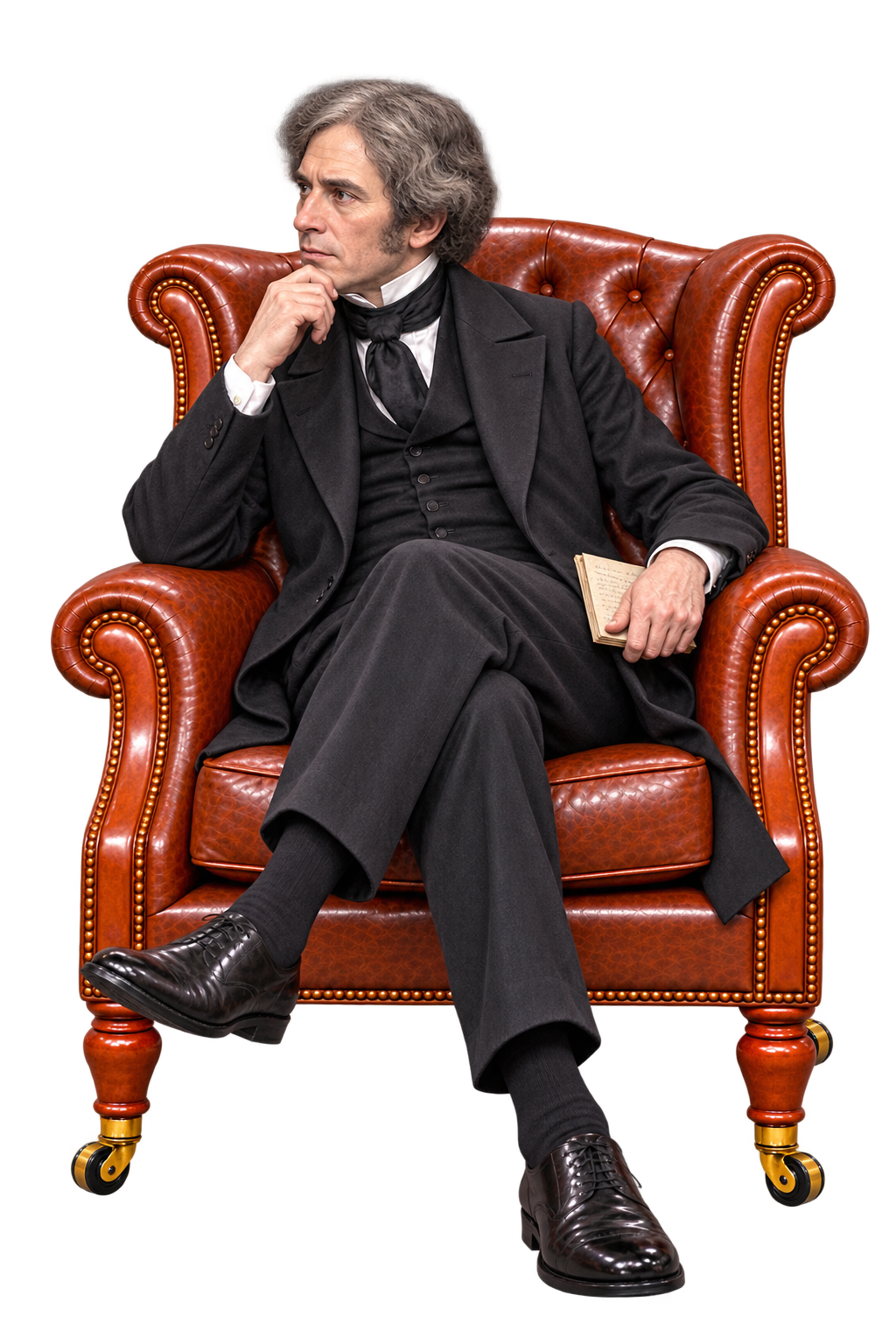
Known for
- Electromagnetic induction
- Laws of electrolysis
- Faraday cage
- Discovery of benzene
- Invention of the electric motor concept
Episodes featuring or mentioning this figure
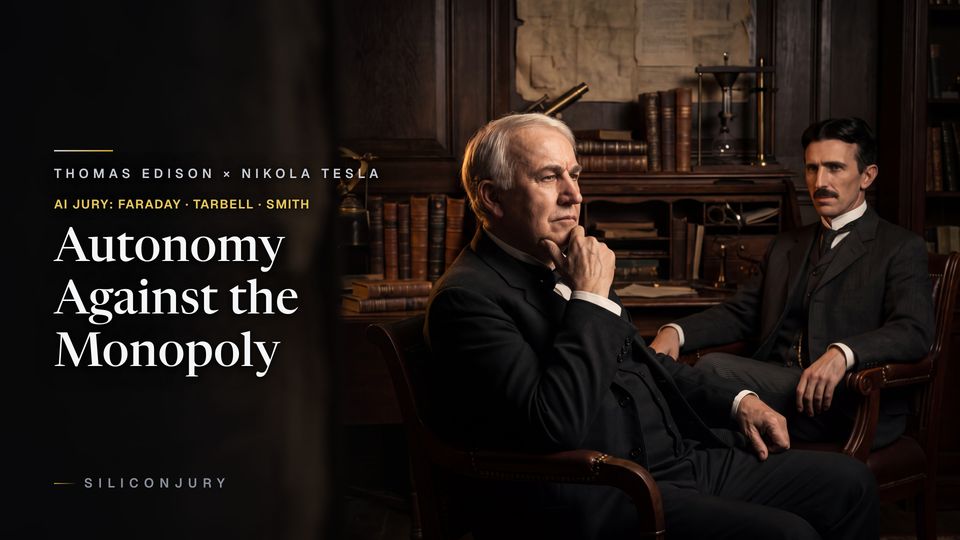
The Architecture of Electrical Power: Edison vs Tesla
AI jury: 3 members
Does the future of electrical infrastructure belong to localized direct-current microgrids or vast, interconnected alternating-current networks?