



Karim Khan Zand
Founder of the Zand dynasty who ruled 18th-century Iran with moderation, styled as the Advocate of the People.
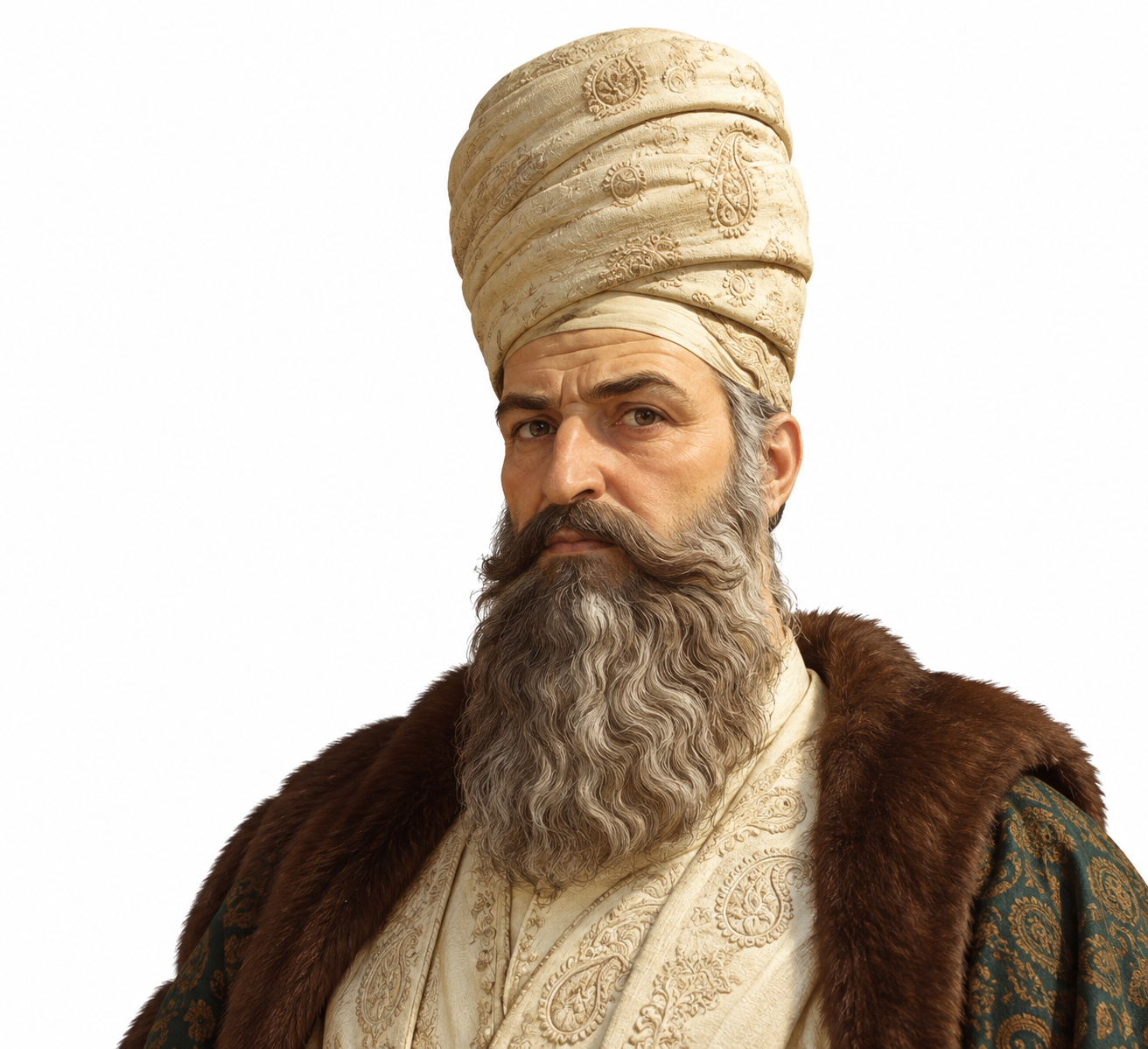
At a glance
- Born
- c. 1705 CE
- Died
- 1779 CE
- Era classification
- Early Modern
- Occupation
- Ruler / Regent
- Homeland
- Iran
- Period
- 18th Century CE
- Field
- Politics, Leadership & War
- Language
- Persian
- Religion
- Islam (Shia)
- Gender
- male
Biography
Karim Khan was a chieftain of the Zand tribe, of Lur or Lak origin, born around 1705 in western Iran. Following the assassination of Nader Shah Afshar in 1747, the country fractured into civil conflict among regional warlords. Karim Khan initially formed an alliance with Ali Mardan Khan Bakhtiari, nominally placing a Safavid figurehead, Ismail III, on the throne. Through military capability and shifting regional alliances, Karim Khan eliminated his competitors and unified central, southern, and western Iran by the early 1760s.
Karim Khan notably refused the traditional imperial title of Shah, adopting instead the designation Vakil ol-Ro'aya ('Advocate of the People' or 'Deputy of the Subjects'). He established his capital at Shiraz and invested substantially in urban renewal, public welfare, and monumental architecture. His building initiatives transformed the city through the construction of the Arg of Karim Khan (citadel), the Vakil Mosque, the Vakil Bazaar, and public bathhouses, while also renovating the mausoleums of classic Persian poets Hafez and Saadi.
His domestic rule brought economic stabilization and legal order after decades of warfare. Karim Khan lowered taxes, promoted regional agriculture, and extended religious tolerance toward Christian and Jewish minorities. In foreign commerce, he cultivated trade relations with the British East India Company through Persian Gulf ports like Bushehr. Toward the end of his reign, he conducted a successful military siege of Ottoman-controlled Basra between 1775 and 1776 to counter Ottoman commercial rivalry in the Gulf.
Karim Khan died in Shiraz on March 1, 1779. His passing sparked immediate succession disputes among members of the Zand clan, which destabilized the realm and ultimately enabled the rise of the Qajar dynasty under Agha Mohammad Khan. Despite the brief existence of his dynasty, historical accounts widely regard Karim Khan's administration as one of the most equitable and stable periods of 18th-century Iranian history.
Portrayal characteristics
Saved editorial descriptions used for the reconstruction; these are not authenticated statements by the depicted person.
- Pragmatic
- Benevolent
- Diplomatic
- Humble
- Culturally supportive
Images & artwork 2

Known for
- Founding the Zand Dynasty
- Adopting the title Vakil ol-Ro'aya (Advocate of the People)
- Architectural development and urban renewal of Shiraz
- Restoring domestic stability to Iran after Nader Shah's death
- Successful capture of Ottoman Basra (1775–1776)
Episodes featuring or mentioning this figure
No eligible published episode featuring this figure is currently in the library.