



Ilya Mechnikov
Pioneering zoologist and immunologist who discovered phagocytosis and won the Nobel Prize in Physiology or Medicine.
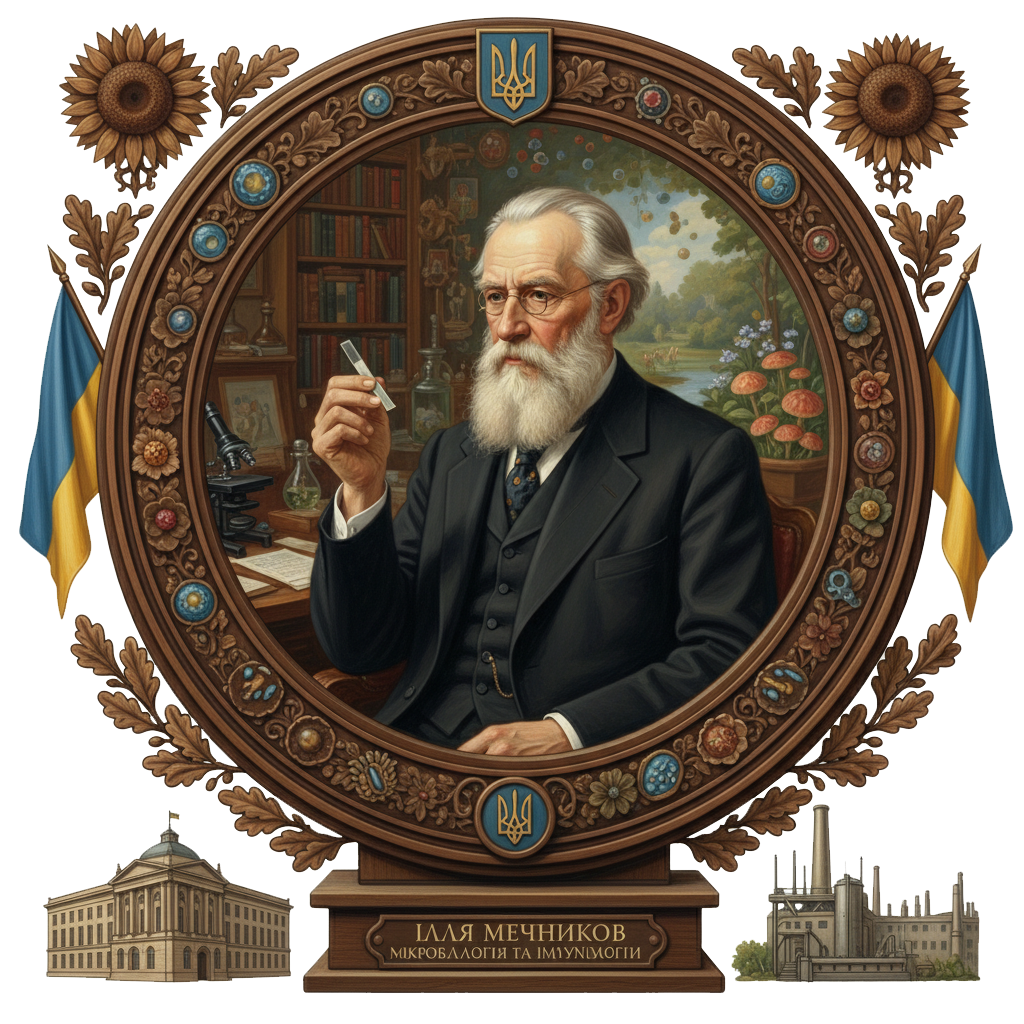
At a glance
- Born
- 1845 CE
- Died
- 1916 CE
- Era classification
- Modern
- Homeland
- Ukraine
- Period
- Late 19th - Early 20th Century
- Field
- Medicine & Natural Science
- Language
- Russian
- Religion
- Atheist
- Gender
- male
Biography
Ilya Mechnikov (also known as Élie Metchnikoff) was born in the Kharkov Governorate of the Russian Empire (now Kharkiv Oblast, Ukraine). He was a brilliant biologist whose early work focused on embryology and comparative anatomy. His most groundbreaking discovery occurred in 1882 while observing starfish larvae, where he identified specialized cells that engulf and destroy foreign bodies.
He named this process 'phagocytosis' and correctly hypothesized that it was a fundamental mechanism of the immune system in defending against bacterial infections. This discovery revolutionized the field of immunology, shifting the focus toward cellular immunity. In 1908, he was awarded the Nobel Prize in Physiology or Medicine, shared with Paul Ehrlich, for his work on immunity.
Later in his career, Mechnikov worked at the Pasteur Institute in Paris. He also became famous for his research into aging and longevity, famously proposing that consuming lactic acid-producing bacteria (like those found in yogurt) could prolong life, laying the early foundations for the concept of probiotics.
Portrayal characteristics
Saved editorial descriptions used for the reconstruction; these are not authenticated statements by the depicted person.
- Inquisitive
- Innovative
- Analytical
- Pioneering
- Observant
Images & artwork 3


Connections
Ivan Pavlov
Contemporary Peers
Mechnikov and Pavlov were the two most prominent Russian scientists of their era, both receiving Nobel Prizes for their work in biology.
While Pavlov focused on the nervous system and digestion, Mechnikov focused on the immune system. They were contemporaries in the late 19th and early 20th centuries, representing the peak of scientific achievement in the Russian Empire and later collaborating within international scientific circles.
Charles Darwin
Influenced By
Mechnikov applied Darwinian evolutionary theory to the study of the immune system.
Mechnikov's discovery of phagocytosis (the process by which cells ingest foreign particles) was framed as an evolutionary survival mechanism. He viewed the struggle between microbes and the body's cells through a Darwinian lens of natural selection and adaptation.
Dmitri Mendeleev
Contemporary Peers
Mechnikov and Mendeleev were leading figures in the Russian scientific community during the late 19th century.
Both scientists were members of the Russian Academy of Sciences and worked to modernize Russian education and research. While their fields differed—chemistry for Mendeleev and biology for Mechnikov—they shared a commitment to empirical science as a tool for national progress.
Ivan Pavlov
Contemporary Peers
Pavlov and Mechnikov were the most prominent Russian scientists of their era, both receiving Nobel Prizes in Medicine.
Pavlov won the prize in 1904 for his work on digestion, while Mechnikov won in 1908 for his work on immunity; together they elevated the international status of Russian physiological research.
Known for
- Discovering phagocytosis
- Winning the 1908 Nobel Prize in Medicine
- Pioneering cellular immunology
- Early research on probiotics and aging
Episodes featuring or mentioning this figure
No eligible published episode featuring this figure is currently in the library.