



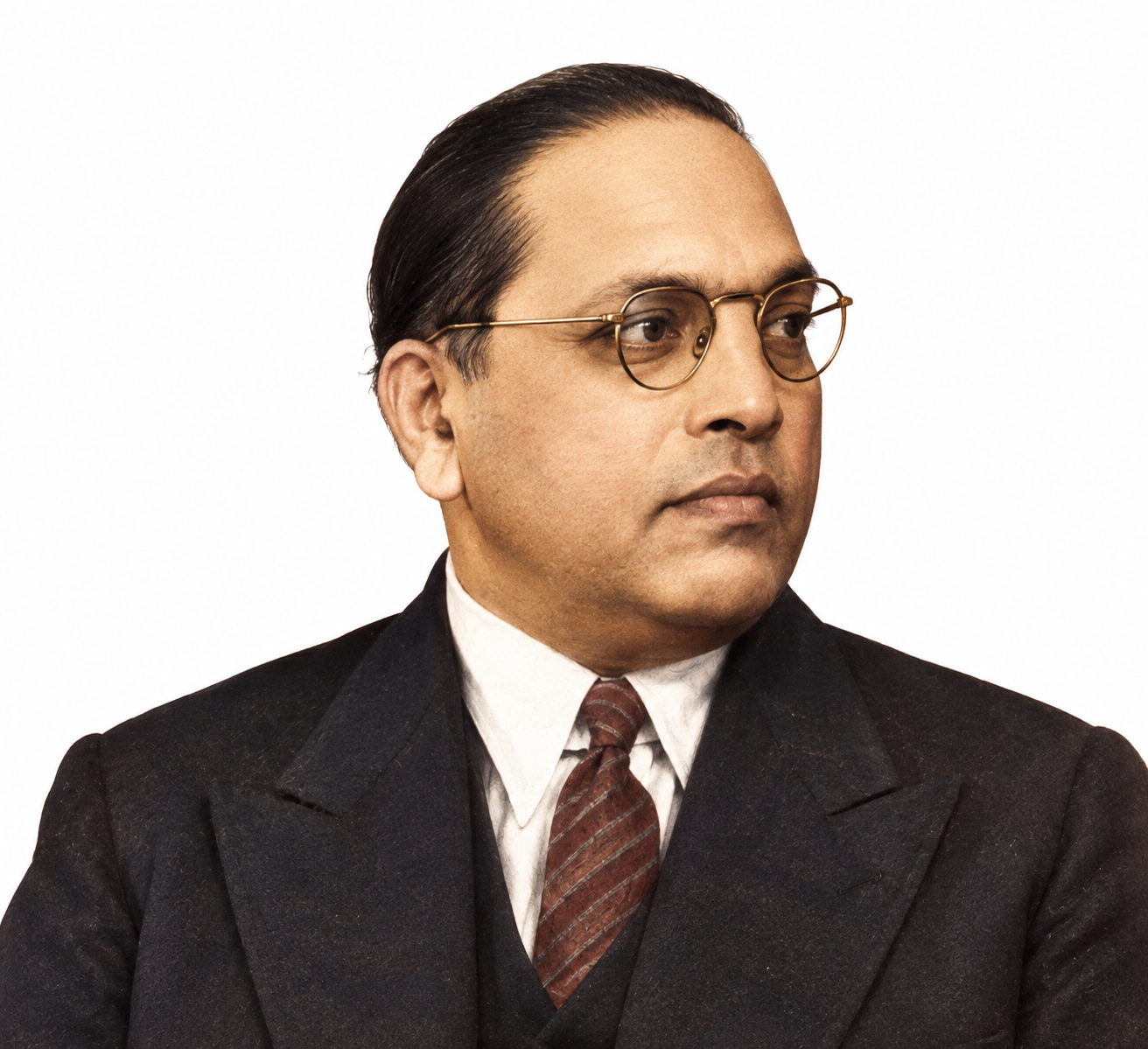
B. R. Ambedkar
Architect of the Indian Constitution and visionary champion of human rights who fought to abolish the caste system.

At a glance
- Born
- 1891 CE
- Died
- 1956 CE
- Era classification
- Modern
- Occupation
- Jurist & Statesman
- Homeland
- India
- Period
- Late 19th – Mid 20th Century
- Field
- Politics & Leadership
- Language
- Marathi
- Religion
- Buddhism
- Gender
- male
Biography
Bhimrao Ramji Ambedkar was born into an impoverished Mahar (Dalit) family in British India, facing severe caste-based discrimination and social ostracism from childhood. Undeterred by institutional prejudice, his extraordinary intellect earned him scholarships to study abroad. He earned doctorates in economics and law from Columbia University and the London School of Economics, also being admitted to the bar at Gray's Inn, establishing himself as one of the most thoroughly educated scholars of his generation.
Upon returning to India, Ambedkar emerged as the foremost leader and voice for the country's oppressed classes, widely known as the 'Untouchables' or Dalits. He founded publications, organized non-violent movements to secure equal access to public water sources and Hindu temples, and forcefully argued that social democracy was an indispensable prerequisite for political democracy. His seminal 1936 text, 'Annihilation of Caste,' delivered a devastating critique of the religious and social hierarchies embedded in orthodox Hindu society.
Following Indian independence in 1947, Ambedkar was appointed the country's first Minister of Law and Justice and served as the Chairman of the Drafting Committee for the Constitution of India. Under his leadership, the committee forged a progressive legal framework that abolished untouchability, prohibited discrimination, and enshrined fundamental civil liberties, social justice, and affirmative action mechanisms for historically marginalized groups.
Disillusioned by orthodox resistance to broader social and legal reforms, such as the Hindu Code Bill, Ambedkar resigned from the cabinet. In October 1956, shortly before his death, he led a historic mass conversion of nearly half a million followers to a rationalist, egalitarian interpretation of Buddhism known as Navayana, cementing his legacy as a transformative social and spiritual liberator.
Portrayal characteristics
Saved editorial descriptions used for the reconstruction; these are not authenticated statements by the depicted person.
- Fierce advocate for justice
- Intellectually brilliant
- Resilient
- Egalitarian visionary
- Prolific scholar
Images & artwork 2
Known for
- Chief architect of the Constitution of India
- Leading the Dalit rights movement
- First Minister of Law and Justice of independent India
- Author of 'Annihilation of Caste'
- Initiating the Dalit Buddhist revival movement
Episodes featuring or mentioning this figure
No eligible published episode featuring this figure is currently in the library.